Shamanista, Mama, MeMa, elder, metastatic cancer survivor, SoulCollage® facilitator, Sagittarian in the Ophiuchus window, snake clan, scar clan, now vulture clan, and a whole lotta other labels that don’t really contain me.
I always pay close mind to the first coherent thoughts I have after transitioning from hypnopompic liminal space (theta) to the alpha->beta realm, just as much as I do the dreamtime information transmitted during the night. The first waking thoughts generally set the real agenda for the day, aside from the mundane tasks scheduled on the calendar.
My first waking thoughts this morning were around the differences between things in shamanic innerstandings. Specifically animism vs shamanism and the archaic impulse vs the shamanic impulse.
My core religion is animism. From that I've woven in many other religious teachings and mysticism. A lot of people confuse animism with shamanism and this confusion is perpetuated by beliefs that shamanism is itself a religion. It's not. It's literally a specific role and a defined practice. Calling shamanism a religion is like calling a Pastor, Priest, Rabbi, Imam, or Lama a religion.
That's not to suggest a shaman is a religious leader or a Holy person, because a shaman is not exactly that either. Some aspects of religious leadership, such as soul tending and intercession, can overlap with shamanic practice, but the role of the shaman can be quite different than the role of a religious leader. In some ways shamanism shares more in common with Western models of chaplaincy or the Buddhist model of the Bodhisattva, but it's not exactly either of those, and is in fact more than that.
My numerous initiations into shamanism began very early in my childhood, but not living in an animistic society that had a held role for shamans, I couldn't have understood my experiences as that. Those initiatory experiences led me into the helping profession. They led to me reading books about serial killers. They led to me studying parapsychology (psychic phenom, telekinesis, remote viewing, etc) as young as 12 years old. They led to me studying demonology and exorcism, and even anthropology, herbology/botany, and ecology. They also led me into psychiatric hospitalizations, drug use, and other negative consequences that unguided shamanic initiations can cause.
But I didn't begin actually learning shamanism in a structured focus until many years later. It was 2011 when I began my focused and intentional study of shamanism, to be exact. And over those years since I've learned a lot from various elders, lineages, practices, cohorts, focused and concentrated studies, and in my own practice, from Spirit allies, and from the patients who've trusted me with their suffering. I will never stop learning.
But what was strongly on my mind upon transition to waking consciousness this morning was village life and the importance of this in rooted shamanic practice. It's probably the single thing I've most longed for and has been the most elusive. And this is where the intersection of the shamanic impulse and the archaic impulse meet.
One of my long-time mentors, whom I have never had a personal relationship with and have only met in person once, briefly after listening to him talk, is Stephen Jenkinson. Stephen consistently hammers the nail of that archaic impulse- village lifestyle. And time and time again, across many experiences within shamanic circles this is what I have experienced personally as lacking. I don’t believe we can nurture the shamanic impulse absent of nurturing the archaic impulse- at least not to full fruition. I’ve seen it attempted time and again, but what I haven’t seen is this one-sided model actually producing vibrant healthy models of community, of village mindset. Best I can tell it’s just producing commodity-based shamanic mindset that is trying to carve out a role in a decaying consumeristic and individual-centered social model.
In his latest book, 'Matrimony: Ritual, Culture, and the Heart's Work', Stephen Jenkinson writes:
"When people lived in clans, their numbers were small. They knew each other's skills, foibles, and oversteps. There was very little privacy of the kind many of us seek and defend and give away so readily now by pressing Send. There was little self-sufficiency. There were, I'm guessing, many who could have been self-sufficient but chose not to be, or were obliged not to be, or were shown how not to be. Self-sufficiency was hard on the neighbours and the neighbourhood. It had a Janus head. On one side was efficiency, on-demand access, lower sticker price. On the other, isolation, village poverty, withering of the ties that bind. Being okay was and is corrosive to social integrity. One of the key strategies in getting along in a village might be not functioning on all cylinders all of the time, not maximizing your potential, not being all you can be.
When people traded for their necessities, they may have done so only partly out of want and dearth. The necessity that bound them in trade was the need each had of the other. They needed not only what each other might have had. They needed each other to be around for the long term, too. They were dependent, and this wasn't a state of mind and state of affairs they needed counselling for. They needed each other not to be good at everything, even if they were. It isn't likely that many people in such an arrangement were on a quest for personal meaning. Their meaning was a given. It was in the hands of those they traded with, petitioned, tolerated, venerated, appealed to, married into. As we'll see, matrimony was a spirited kind of trade, and it lived out beyond the rule of self-sufficiency.
These people would have lived in a kind of proximity that afforded most of them more than a passing familiarity with how things were made, done, sewn, and woven. To have that familiarity, they needed to pay attention and learn other people's ways. It's that second-order attention- the kind that has a soft focus that isn't bound to personal mastery but to the cluster of skills and intuition that makes up a working village- that is called upon in trade. And the etiquette of trade is where the workings of ritual matrimony come from.
When it came time to trade, each partner was deeply familiar with the latent and manifest worth of the items involved. They knew the lineage of learning. The principal exchange, then, would not be in goods or services but in mutual regard, respect, and acknowledgment of the life work that went into them. The proto-currency of trade is open acknowledgement of the other person's lifeways......"
He goes on to distinguish the trade between strangers:
"Their real relationship is to the items they are attempting to exchange. That's what produces trinkets, baubles, curios, gimcrack, memorabilia, tawdry and tired bits of ephemera- most of the stuff in the souvenir shop intended for people who're just passing through. Whatever spirit animated the items and the trade is gone. There's a price tag where there used to be honour."
As long as I've been studying shamanism I've repeatedly heard the tenet that one cannot call themselves a shaman, but that it's up to the tribe to recognize someone as a shaman. Stephen himself has suggested the same in recognizing the true elders among us. As many of us in post-industrialized countries know, we don't live by those ways. We don't organize our belonging in village lifestyle. Yet we have more access to others than we've ever had through the Internet and supporting technologies. We've truly become a Global People with unprecedented access to connection. But making connection isn't the same as creating village. Any shamanic individual who attempts to create such a dynamic, regardless of how indigenous or legitimate they are as shamans, what results can quickly start to take on the characteristics of a cult, wholly unnatural if not tended genuinely from a village-making mind and heart. Likewise, without some semblance of a properly held relationship between shamanic elder and student, or students if in a cohort, the very roots of the shamanic practice are at best shallow, or on rocky terrain. To get to the depths of legitimate and safe shamanic practice one must have had elders, real living elders whom they’ve been tended by properly, who are ensuring the emotional, spiritual, mental, and physical well-being of the initiate is solid. This goes well beyond merely teaching shamanic concepts or skills. It entails closely held relationship.
True village making and tending requires tremendous commitment and intention. And, as I’ve shared, my personal experience hasn’t demonstrated that this is a skill that is abundant in our modern cultures. Most have never lived in village life, and thus they have no well from which they can draw the water from. This is certainly the case for me. And yet I find myself yearning, feeling the impulse, and even perhaps having the inherent skills and desire to tend such a lifestyle, but also experiencing the scarcity of like-mindedness and skill. If you’re not circling with at least like-minded and equally committed people, there is no foundation from which a village can be developed. Are we too self-determined, too focused on the mutual trade and not the inherent worth of individuals, that the matrimonial ways of relating are beyond our grasp? Can we ever reclaim the archaic ways our ancient ancestors thrived in, shamanism thrived in?
I can’t answer this. I only know I’ve been disappointed over and over in the many experiences I’ve had with group affiliations and the lack of depth and authenticity in which people show up for one another, and especially how easily they turn their backs on one another or ‘other’ those who don’t toe a certain ideological line or exhibit defined behaviors that earn them a right to belong- even, and especially, among shaman groups, but certainly not exclusive in my experiences, particularly recently. We still feel so very divided in a time when we need to find our way back to one another. But, as my elder Stephen Jenkinson would say, “Maybe now you are working for a time not your own.” And there is a certain kind of sadness to this realization, but also a gratitude for those elders/teachers who have shown me village tending, like Jenkinson, and also like author Martin Prechtel. The sadness isn't so much that I may not be alive to see the fruit of my work, but that there's a possibility a sufficient archaic impulse won't lead others to continue the work. I know Stephen would say to persist as though the work does matter.
I don’t know where to go from here and don’t know what more I can do other than put words to that which I have experienced and am observing. Perhaps others will witness it as well, and will gather, or commit to learning the skills, or at least exploring the possibilities and willingness to allow those who have the skills to tend to them in the fullness of heart. Until them I am going to continue learning shamanistic practices and skills, while continuing to learn about village heart and mind, as I keep practicing and writing about this as long as my heart can contain and it keeps moving me forward.
Shamanista, Mama, MeMa, elder, metastatic cancer survivor, SoulCollage® facilitator, Sagittarian in the Ophiuchus window, snake clan, scar clan, now vulture clan, and a whole lotta other labels that don’t really contain me.
When I first watched The Work I was profoundly moved. Without giving any spoilers (The Urban Shaman reviewed The Work, if you're not familiar with it), I'll just say that there's one scene in particular that is noteworthy and offers the viewer a path of action. I accepted that invitation and in December 2017 sent a letter and Christmas card to California inmate #T-54048.
That inmate has a name: Dante Granville. And a story.
Photo courtesy of Joe Wigdahl
Dante is an African American male who has been in prison since November 2000, sentenced for his first offense as an adult. He was a young 21 years old at the time of his incarceration. The natural inclination is to want to understand what got Dante in this situation. But I will let him paint the picture he wants to paint. But before I do that I just want to encourage you to lean in hard. Let go of stereotypes, let go of fear, and just lean in. A small detail I want to point out before we jump in: The Work was filmed in 2010 at the "new Folsom prison" in California (the original Folsom being of Johnny Cash fame). Dante has since been moved to Corcoran. It's not a prison I am unfamiliar with. It's where the infamous inmate Charles Manson was transferred to in 1989 , and where I personally visited a beloved soul brother. I won't soon forget taking the 'prison bus' from the reception area to the visiting area and passing by many nude men showering outside in the 'yard' as we passed by. Believe me- it wasn't titillating. It just felt inhumane. The entire experience of visiting an inmate there was quite traumatic really. Pat-downs, specific rules about clothing, watchful eyes and ultrasonic ears. I couldn't relax and be 'me' in any way. And the inmate I was visiting was 'level II'- I can't even imagine the barriers to visiting someone with a heavier sentence. So here enters Dante:
AS: You mentioned The Work was filmed a number of years ago and you’ve since been moved to another California prison. So you’ve had some changes in circumstance and also lots of time to process your experience of The Work. How have things changed for you in that time, and what do you attribute to your experience with The Work?
DG: Yes, a lot has changed for me in my life since the recording of The Work. The main thing is that new laws have passed since then and I will now be eligible for parole in a few years from now. I will now be able to be free again one day, as well as be the father to my son that he needs and deserves. The documentary, The Work, was filmed during one of our "Four Day" sessions in the "Mens Support Group/ InsideCircle.org" at new Folsom prison in the year 2010. Back then my circumstances were completely different and I was in a very bad place in my life. And what I attribute to the group, during that four day experience, is the extra strength that I needed at that time to keep me from giving up all hope and allowing myself to head down a path of self destruction, and that is something that I hold onto to this very day.
In this photo taken on Tuesday, Dec. 29, 2015, a sign warning that no warning shots will be fired is seen on a recreation yard near death row at San Quentin State Prison in San Quentin, Calif. With California's lethal injection protocol in limbo, the nearly 750 inmates at San Quentin State Prison, the nations most populous death row, are more likely to die from natural causes or suicide than execution. (AP Photo/Ben Margot)
"So a lot has changed for me since then, and those days of me wanting to force the gunner in the tower to pull that trigger are behind me."
AS: The Work demonstrates a lot of shamanic undertones. It is a program that seems to tap into building a strong sense of community, accountability to that community, and builds a safe and accepting place to go deep into some dark places. Was this experience self-contained, or did some of the principles and things you discovered spill out into your relationships and experiences outside of the container of the program?
DG: Yes, many or all of the principles and things that we have discovered in the Men's Support Group, as well as during that Four Day Session, have spilled out into our daily lives on many levels in our relationships with one another [in prison], as well as with other people in life. It even effects us on a personal level in our day to day lives. The Men's Support Group seems to have picked up a few things from the shamans. I have known for years that it was an accumulation of different things that many different people, from different walks of life, have brought to it since the day it was created. I guess that is one of the reasons that it has become so popular and is attracting so many different people throughout the world. I emphasized the Men's Support Group a lot because the documentary The Work was based on the Men's Support Group. The Work is just the title of the documentary, but The Work was created solely by members of the Men's Support Group from the participants, producers, down to the camera men. The founder of the Men's Support Group, an inmate named Patrick Nolan, has since passed away. (For more information about the Inside Circle Foundation's Men's Support Group, visit their website at: http://insidecircle.org)
AS: You were still young when you participated in the filming of The Work. Had you had any previous experience similar to that? And if this was your first experience like that, have you had any additional experiences that are similar? (If you haven’t had experience similar, perhaps you can share how you think The Work changed you and what you might be like if you hadn’t had that experience).
DG: Yes, I was younger when I participated in that particular Four Day Session but it was not the first time nor the last time that I had participated in them. I had joined the the Men's Support Group back in 2004, when I was in my mid-twenties, and was a member up until I transferred out to another prison in 2015. During those years I had participated in several of these Four Day Sessions.
"I was very young, had no family, was stuck in foster care, and due to that I ended up becoming a product of my environment. I joined a gang because I had no family and so my peers, many who also came from broken homes, became my family. We were all one another had and it is still that way to this very day, even in prison where the majority of us ended up in life. "
AS: At one point in The Work your story and process comes into sharp focus. You seemed to feel abandoned and hopeless, and along with these feelings came suicidality. How were you able to dig out from that dark place and find hope and joy again?
DG: At that time in my life I was on the verge of giving up all hope and allowing myself to head down a path of self destruction which would have more than likely lead to me forcing the gunner in the tower to pull the trigger on me. During that process I was able to get the extra strength that I needed and that strength helped give me hope again. I still have that hope to this very day. I have hope that I will be a part of my son's life one day and that I will get out of prison one day.
AS: You’ve been an unfortunate subject of California's retributive criminal justice model, and as such are currently potentially serving a life sentence (with possibility of parole). Nearly all of our readers are not going to have any first-hand experience or even reference for what life is like for someone sentenced to life in prison. Do you have anything specific you’d like to offer to other people who might be struggling with hopelessness?
DG: I was arrested on 11-26-2000, when I was just 21 years old, on my first offense as an adult. I was convicted and sentenced with 40 years to life in prison, where I remain to this very day. What I have to offer other people who might struggle with hopelessness is a little advice and that is to find someone, or some sort of support group, like the one we have, where they can get the help that they need. There is someone, or something, out there for all of us- you just have to look.
"What led me to making the decisions that I made in life was me and my need for respect, recognition, and approval from my peers and the only way to get that from fellow gang members is by doing and participating in negativity. You don't get respect, recognition, and approval for doing positive things."
AS: You’ve seemed reluctant to talk about the offense you were charged with and found guilty of. Why are you reluctant to talk about these circumstances and have you been able to find inner peace with yourself and the circumstances that have determined your life path? What part has The Work played in that?
DG: I didn't know that I came off reluctant to talk about my committing offense that landed me in prison. Truthfully I don't even remember ever speaking of it or being asked about it at all. I have no problem speaking about it, but at the same time I wouldn't want to focus too much on it either. I was arrested, charged, and convicted of attempted murder for shooting another man during an ongoing confrontation between him and I. I was 21 years old at the time and it is an unfortunate situation that him and I both have to live with to this very day. We both played a role in what happened that day, as well as the events leading up to it, and I take full responsibility for my actions. I blame no one else. What the Men's Support Group did for me concerning my committing offense is help me, through a series of processes, be accountable and take responsibility for my actions. Because, at one point in time I was not able to see my own fault and could only point fingers, place blame, and hang on to my belief that it was self-defense and none of it was my fault. Also what the group helped me to do was let go of my anger that I had towards my victim, the system, as well as my family, friends, and everyone else who practically abandoned me or turned their backs on me since I have been in prison. I am not 100% at peace with what has become of my life, but I am a lot better off than I was before coming to the Men's Support Group.
AS: In the past California had a very staunch retribution model of incarceration. It seems to have moved into a rehabilitative model, which has opened up possibilities and potentialities for you. In what ways do you think you are contributing positively to both the prison community you’re living within, and the larger community outside the prison environment? Is contribution important to you? How do you think your story as highlighted in The Work might positively affect people?
DG: Yes, in the past California's prison system was used merely as a means of punishment and nothing more, but in recent years they have been forced by the California voters, Governor Jerry Brown, and many others to take a more rehabilitative approach to dealing with it's over crowded, and failing prison system. Many years ago an inmate by the name of Patrick Nolan, free staff Donald Morrison, and several others at Folsom Prison, had thought of and created the Men's Support Group as a way to help us prisoners to deal with and resolve the very important issues in our lives that may be holding us back in various ways, and/or contributing to us making the poor decisions that may have landed us in prison, and/or keeping us from remaining free once we are paroled. The Men's Support Group not only helps us individuals involved, but also those on the outside when we return back to society a lot better than we were when we came in. This group is also available to us, as well as anyone else who wants to be involved, once we are released and many of us continue to remain a part of the group and continue on our path of self betterment. I plan on working with at-risk teens and young adults when I get out in a few years, and plan to use all of the things I've learned in the Men's Support Group, and that helped me to become a better person, when dealing with those who could use it. That will be my way of giving back to society.
"My need for family, to belong, to be loved, respected, recognized, and approval from my peers are all contributing factors that led to me making almost all of the wrong decisions that I've made throughout my life, including the one that landed me in prison with a life sentence. I was able to take a good look at myself in the Men's Support Group and those are some of the things that I've come to find out about myself and that I have been successfully working on."
AS: The Work may have been an initiation of sorts, orienting you on a specific path of emotional healing and development. You’ve obviously transmuted a lot of stuff (turned “bad” into “good”) since then, and are still working on that. Where do you think you are in this process? What have you learned along the way?
DG: Yes, The Work was filmed during one of our Four Day Sessions and many involved were initiates and many others weren't and had already gone through the initiation process and were there to help and assist those who were initiates during their first Four Day Session. Yes, I have been able to turn a lot of the bad in my life around, and some of it into good, and I have come a very long way, since the day I first joined the group, but my journey is nowhere near complete. I still have a long way to go, because it is something that is considered continuous in the group. I am committed to that and determined to continue with it throughout the rest of my life. One of the main things that I've learned in the Men's Support Group is that everything pretty much always comes back to me, and that it is "I" who has to man up and make a change for the better if I truly want change in my life. Once I stopped looking elsewhere, and/or at everyone else, and began to look within myself, then positive changes began to happen for me and those positive changes are still happening for me to this very day.
"I have been separated from all of my family for many years now and at this moment all I want is to be with them and whenever I hear other people talk about being with their families I always feel it is a good thing despite all of the arguments and disagreements they are having. At least they are able to be together. Some people don't know what they got until it is gone."
AS: What is one thing you want readers to most understand or know about who Dante Granville is?
DG: That even though I have made my share of mistakes in life I still consider myself a good man, who has not only learned from my mistakes, but who now only wants to live a good, honest life as a free man.
I have a message or a little advice that I would like to give to those troubled or at risk teens and young adults as well as those who have loved ones in prison:
I just want to tell those who are headed down the wrong path in life to please cherish life, and everything that it has to offer, and that nothing is worth you jeopardizing it. Because it is true when they say that you don't know what you got until it is gone. For us in prison, especially those with life sentences, it is like being a ghost in a movie. No one can see us, touch us, or hear us and we feel all alone, and the only thing that we truly want is to feel alive again and to return back to the land of the living. Nothing compares to life and the freedom that comes with it. It is God's greatest gift. And the advise I would give to those who do have family and friends in prison would be for them to not give up on them, never leave them alone, and to love and support them as much as possible. Because unconditional love and a strong support system helps to keep us alive and from feeling like a ghost.
PS. For those interested or who would like someone to talk to please write me at the address below or contact me via email by adding yourself to my email contact list at:
Dante Granville T54048 CSATF C-6-116 PO Box 5246 Corcoran, CA 93212 U.S.A.
I don't want to paint a grim picture. Dante is hopeful that his first parole hearing is coming sooner than he originally expected and that he can start his life outside of the prison walls. California does seem to be making strides in this way. But the reality is, the system isn't set up to support success for convicted felons. The friend I told you about- he was a first-time felon as well- a minor offense that got him a two year sentence (after reduction). He paroled, but being a middle-aged man already and not having any family to support him, he struggled significantly to get on his feet after his release. He was literally released with one set of clothing and a ticket for a train ride back to the county where he committed the offense. Because of his incarceration he had lost everything. The rules of parole are strict- he couldn't reside outside of the county of his original offense, he couldn't associate with other felons, couldn't test positive for drugs or alcohol, couldn't have in his possession or be anywhere near firearms. And as a convicted felon his opportunity to find employment was significantly limited, and the federal government doesn't allow felons to be eligible for financial aid for college either. So it wasn't long before he was homeless, and within a year was already re-incarcerated for parole violation because in that kind of situation usually the only people you can find to help you are the very ones who contribute to the violations. He had multiple re-commitments because of relatively minor violations. And when they violate you they send you back to prison. We eventually lost contact with Jesse. I worry the same obstacles will snare Dante if he is released.
Having developed a steady stream of communication over the past year, I've learned a lot about Dante's situation. He doesn't have family to lean on. Dante has been earnestly waiting for his son to turn 18 (in June 2019), but being a father from prison is a nearly impossible task. Communications are heavily monitored and controlled, and lack of visitation creates a natural distance. Dante's mother lives in another state, and also cannot visit because of her own extensive criminal justice history. So if/when he is paroled he will be sent by one-way ticket back into the place where his original gang connections led him to make those decisions that landed him in prison, and with no encouraging family there to support him. Nevertheless, Dante's story is one of hope, of redemption, of rehabilitation. He has spent nearly 15 years participating in very intense multi-day therapeutic workshops, all intended to give him the inner strength and tools to be able to jump the hurdles he may face if he is released. And I know he wants nothing more than to be out of prison.
While prison life provides protections against the external systemic oppression he will face as a middle-aged, African American male who's a convicted felon, it's equally challenging and oppressive. The progression of privileges since Dante was first incarcerated have been exceptional. We've communicated mostly through JPay- an online email system. But all of those communications are monitored by the prison mailroom, and there have been several times Dante paid in digitized stamps to send an email to me that I never received. And it's not as simple as being able to forward or re-send. He doesn't have the capability to copy/paste. He also can't take photos or video with his tablet. He doesn't have full Internet access. Most people don't have landlines anymore, and rely on smart phones to communicate via various social media sites and apps- none of which Dante has access to. All of these barriers to communication make it difficult to establish or maintain relationships in our rapidly evolving, technologically-dependent culture.
But I share Dante's story not to discourage you. I share it because Dante offers an inside look at a massive systemic problem. Studies show that nearly 30% of prisoners are former foster youth, and a disproportionate number of foster youths are African American. We also know that there's disproportionate numbers of African American men in prison. So this is a systemic problem and our communities are failing. Our communities need to embrace the rehabilitative model and continue it with offering services during parole periods. They also need to build stronger mentoring programs for foster care youth. These are ways shamanic individuals can step-up to fill gaps or consider entry points into the lives of people who might benefit from deep shamanic work. Programs like those offered through the Inside Circle Foundation offer a template, a foundation for in-prison work. And collaborations build strong practice, so consider that as well. Together we are much stronger and innovative than when we stand alone. I want Dante's story to inspire you, to motivate you, and if it doesn't do that, to at least offer you a moment of gratitude. That in itself is healing medicine.
Do you know of any other rehabilitative programs operating in your local prisons? Share them in the community forums!
Have you had direct experience with an inmate? Share it with us! What insights have you gotten?
Prisons generally don't allow shamans to offer programs or services. Do you think they should? And if so, by what means would a shaman be "certified" or "official" in a way the system would honor?
There are always two sides to the coin. While "offenders" are always labeled as the "bad guys" and those they commit crimes against are labeled as "victims", in reality criminal activity creates many "victims" on both sides of the equation. Mamas lose their sons to the system, sisters their brothers, women their lovers, and babies their daddies. How can expanding your view of offenders and the net that is cast enlighten your practice?
While accepting responsibility for one's actions, including criminal and/or violent behaviors, is a necessary part of rehabilitation, often inmates have a common thread of systemic oppression and very difficult childhood circumstances. All of this lends to a certain lifestyle that promotes violence, self-preservation, and loyalty to criminal organizations (gangs). How important do you think preventative programs and work are to our communities?
Certain communities, such as those in Sierra Leone, model a grass-roots, community-based reconciliation model. How important is this type of model to contemporary cultures, and how might we build these models in our local communities?

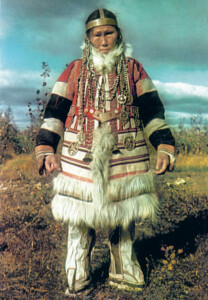
 But what was strongly on my mind upon transition to waking consciousness this morning was village life and the importance of this in rooted shamanic practice. It's probably the single thing I've most longed for and has been the most elusive. And this is where the intersection of the shamanic impulse and the archaic impulse meet.
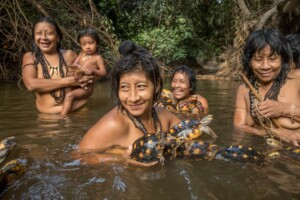 ny shamanic individual who attempts to create such a dynamic, regardless of how indigenous or legitimate they are as shamans, what results can quickly start to take on the characteristics of a cult, wholly unnatural if not tended genuinely from a village-making mind and heart. Likewise, without some semblance of a properly held relationship between shamanic elder and student, or students if in a cohort, the very roots of the shamanic practice are at best shallow, or on rocky terrain. To get to the depths of legitimate and safe shamanic practice one must have had elders, real living elders whom they’ve been tended by properly, who are ensuring the emotional, spiritual, mental, and physical well-being of the initiate is solid. This goes well beyond merely teaching shamanic concepts or skills. It entails closely held relationship.
 personally visited a beloved soul brother. I won't soon forget taking the 'prison bus' from the reception
 as with other people in life. It even effects us on a personal level in our day to day lives. The Men's Support Group seems to have picked up a few things from the shamans. I have known for years that it was an accumulation of different things that many different people, from different walks of life, have brought to it since the day it was created. I guess that is one of the reasons that it has become so popular and is attracting so many different people throughout the world. I emphasized the Men's Support Group a lot because the documentary The Work was based on the Men's Support Group. The Work is just the title of the documentary, but The Work was created solely by members of the Men's Support Group from the participants, producers, down to the camera men. The founder of the Men's Support Group, an inmate named Patrick Nolan, has since passed away. (For more information about the Inside Circle Foundation's Men's Support Group, visit their website at:
  "I was very young, had no family, was stuck in foster care, and due to that I ended up becoming a product of my environment. I joined a gang because I had no family and so my peers, many who also came from broken homes, became my family. We were all one another had and it is still that way to this very day, even in prison where the majority of us ended up in life.
  "What led me to making the decisions that I made in life was me and my need for respect, recognition, and approval from my peers and the only way to get that from fellow gang members is by doing and participating in negativity. You don't get respect, recognition, and approval for doing positive things."
 "My need for family, to belong, to be loved, respected, recognized, and approval from my peers are all contributing factors that led to me making almost all of the wrong decisions that I've made throughout my life, including the one that landed me in prison with a life sentence. I was able to take a good look at myself in the Men's Support Group and those are some of the things that I've come to find out about myself and that I have been successfully working on."
 "I have been separated from all of my family for many years now and at this moment all I want is to be with them and whenever I hear other people talk about being with their families I always feel it is a good thing despite all of the arguments and disagreements they are having. At least they are able to be together. Some people don't know what they got until it is gone."


