


Shamanista, Mama, MeMa, elder, metastatic cancer survivor, SoulCollage® facilitator, Sagittarian in the Ophiuchus window, snake clan, scar clan, now vulture clan, and a whole lotta other labels that don’t really contain me.
I always pay close mind to the first coherent thoughts I have after transitioning from hypnopompic liminal space (theta) to the alpha->beta realm, just as much as I do the dreamtime information transmitted during the night. The first waking thoughts generally set the real agenda for the day, aside from the mundane tasks scheduled on the calendar.
My first waking thoughts this morning were around the differences between things in shamanic innerstandings. Specifically animism vs shamanism and the archaic impulse vs the shamanic impulse.
My core religion is animism. From that I've woven in many other religious teachings and mysticism. A lot of people confuse animism with shamanism and this confusion is perpetuated by beliefs that shamanism is itself a religion. It's not. It's literally a specific role and a defined practice. Calling shamanism a religion is like calling a Pastor, Priest, Rabbi, Imam, or Lama a religion. 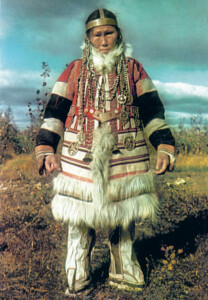
That's not to suggest a shaman is a religious leader or a Holy person, because a shaman is not exactly that either. Some aspects of religious leadership, such as soul tending and intercession, can overlap with shamanic practice, but the role of the shaman can be quite different than the role of a religious leader. In some ways shamanism shares more in common with Western models of chaplaincy or the Buddhist model of the Bodhisattva, but it's not exactly either of those, and is in fact more than that.
My numerous initiations into shamanism began very early in my childhood, but not living in an animistic society that had a held role for shamans, I couldn't have understood my experiences as that. Those initiatory experiences led me into the helping profession. They led to me reading books about serial killers. They led to me studying parapsychology (psychic phenom, telekinesis, remote viewing, etc) as young as 12 years old. They led to me studying demonology and exorcism, and even anthropology, herbology/botany, and ecology. They also led me into psychiatric hospitalizations, drug use, and other negative consequences that unguided shamanic initiations can cause.
But I didn't begin actually learning shamanism in a structured focus until many years later. It was 2011 when I began my focused and intentional study of shamanism, to be exact. And over those years since I've learned a lot from various elders, lineages, practices, cohorts, focused and concentrated studies, and in my own practice, from Spirit allies, and from the patients who've trusted me with their suffering. I will never stop learning.
 But what was strongly on my mind upon transition to waking consciousness this morning was village life and the importance of this in rooted shamanic practice. It's probably the single thing I've most longed for and has been the most elusive. And this is where the intersection of the shamanic impulse and the archaic impulse meet.
One of my long-time mentors, whom I have never had a personal relationship with and have only met in person once, briefly after listening to him talk, is Stephen Jenkinson. Stephen consistently hammers the nail of that archaic impulse- village lifestyle. And time and time again, across many experiences within shamanic circles this is what I have experienced personally as lacking. I don’t believe we can nurture the shamanic impulse absent of nurturing the archaic impulse- at least not to full fruition. I’ve seen it attempted time and again, but what I haven’t seen is this one-sided model actually producing vibrant healthy models of community, of village mindset. Best I can tell it’s just producing commodity-based shamanic mindset that is trying to carve out a role in a decaying consumeristic and individual-centered social model.
In his latest book, 'Matrimony: Ritual, Culture, and the Heart's Work', Stephen Jenkinson writes:
"When people lived in clans, their numbers were small. They knew each other's skills, foibles, and oversteps. There was very little privacy of the kind many of us seek and defend and give away so readily now by pressing Send. There was little self-sufficiency. There were, I'm guessing, many who could have been self-sufficient but chose not to be, or were obliged not to be, or were shown how not to be. Self-sufficiency was hard on the neighbours and the neighbourhood. It had a Janus head. On one side was efficiency, on-demand access, lower sticker price. On the other, isolation, village poverty, withering of the ties that bind. Being okay was and is corrosive to social integrity. One of the key strategies in getting along in a village might be not functioning on all cylinders all of the time, not maximizing your potential, not being all you can be.
When people traded for their necessities, they may have done so only partly out of want and dearth. The necessity that bound them in trade was the need each had of the other. They needed not only what each other might have had. They needed each other to be around for the long term, too. They were dependent, and this wasn't a state of mind and state of affairs they needed counselling for. They needed each other not to be good at everything, even if they were. It isn't likely that many people in such an arrangement were on a quest for personal meaning. Their meaning was a given. It was in the hands of those they traded with, petitioned, tolerated, venerated, appealed to, married into. As we'll see, matrimony was a spirited kind of trade, and it lived out beyond the rule of self-sufficiency.
These people would have lived in a kind of proximity that afforded most of them more than a passing familiarity with how things were made, done, sewn, and woven. To have that familiarity, they needed to pay attention and learn other people's ways. It's that second-order attention- the kind that has a soft focus that isn't bound to personal mastery but to the cluster of skills and intuition that makes up a working village- that is called upon in trade. And the etiquette of trade is where the workings of ritual matrimony come from.
When it came time to trade, each partner was deeply familiar with the latent and manifest worth of the items involved. They knew the lineage of learning. The principal exchange, then, would not be in goods or services but in mutual regard, respect, and acknowledgment of the life work that went into them. The proto-currency of trade is open acknowledgement of the other person's lifeways......"
He goes on to distinguish the trade between strangers:
"Their real relationship is to the items they are attempting to exchange. That's what produces trinkets, baubles, curios, gimcrack, memorabilia, tawdry and tired bits of ephemera- most of the stuff in the souvenir shop intended for people who're just passing through. Whatever spirit animated the items and the trade is gone. There's a price tag where there used to be honour."
As long as I've been studying shamanism I've repeatedly heard the tenet that one cannot call themselves a shaman, but that it's up to the tribe to recognize someone as a shaman. Stephen himself has suggested the same in recognizing the true elders among us. As many of us in post-industrialized countries know, we don't live by those ways. We don't organize our belonging in village lifestyle. Yet we have more access to others than we've ever had through the Internet and supporting technologies. We've truly become a Global People with unprecedented access to connection. But making connection isn't the same as creating village. A ny shamanic individual who attempts to create such a dynamic, regardless of how indigenous or legitimate they are as shamans, what results can quickly start to take on the characteristics of a cult, wholly unnatural if not tended genuinely from a village-making mind and heart. Likewise, without some semblance of a properly held relationship between shamanic elder and student, or students if in a cohort, the very roots of the shamanic practice are at best shallow, or on rocky terrain. To get to the depths of legitimate and safe shamanic practice one must have had elders, real living elders whom they’ve been tended by properly, who are ensuring the emotional, spiritual, mental, and physical well-being of the initiate is solid. This goes well beyond merely teaching shamanic concepts or skills. It entails closely held relationship.
True village making and tending requires tremendous commitment and intention. And, as I’ve shared, my personal experience hasn’t demonstrated that this is a skill that is abundant in our modern cultures. Most have never lived in village life, and thus they have no well from which they can draw the water from. This is certainly the case for me. And yet I find myself yearning, feeling the impulse, and even perhaps having the inherent skills and desire to tend such a lifestyle, but also experiencing the scarcity of like-mindedness and skill. If you’re not circling with at least like-minded and equally committed people, there is no foundation from which a village can be developed. Are we too self-determined, too focused on the mutual trade and not the inherent worth of individuals, that the matrimonial ways of relating are beyond our grasp? Can we ever reclaim the archaic ways our ancient ancestors thrived in, shamanism thrived in?
I can’t answer this. I only know I’ve been disappointed over and over in the many experiences I’ve had with group affiliations and the lack of depth and authenticity in which people show up for one another, and especially how easily they turn their backs on one another or ‘other’ those who don’t toe a certain ideological line or exhibit defined behaviors that earn them a right to belong- even, and especially, among shaman groups, but certainly not exclusive in my experiences, particularly recently. We still feel so very divided in a time when we need to find our way back to one another. But, as my elder Stephen Jenkinson would say, “Maybe now you are working for a time not your own.” And there is a certain kind of sadness to this realization, but also a gratitude for those elders/teachers who have shown me village tending, like Jenkinson, and also like author Martin Prechtel. The sadness isn't so much that I may not be alive to see the fruit of my work, but that there's a possibility a sufficient archaic impulse won't lead others to continue the work. I know Stephen would say to persist as though the work does matter.
I don’t know where to go from here and don’t know what more I can do other than put words to that which I have experienced and am observing. Perhaps others will witness it as well, and will gather, or commit to learning the skills, or at least exploring the possibilities and willingness to allow those who have the skills to tend to them in the fullness of heart. Until them I am going to continue learning shamanistic practices and skills, while continuing to learn about village heart and mind, as I keep practicing and writing about this as long as my heart can contain and it keeps moving me forward.