Shamanista, Mama, MeMa, elder, metastatic cancer survivor, SoulCollage® facilitator, Sagittarian in the Ophiuchus window, snake clan, scar clan, now vulture clan, and a whole lotta other labels that don’t really contain me.
I always pay close mind to the first coherent thoughts I have after transitioning from hypnopompic liminal space (theta) to the alpha->beta realm, just as much as I do the dreamtime information transmitted during the night. The first waking thoughts generally set the real agenda for the day, aside from the mundane tasks scheduled on the calendar.
My first waking thoughts this morning were around the differences between things in shamanic innerstandings. Specifically animism vs shamanism and the archaic impulse vs the shamanic impulse.
My core religion is animism. From that I've woven in many other religious teachings and mysticism. A lot of people confuse animism with shamanism and this confusion is perpetuated by beliefs that shamanism is itself a religion. It's not. It's literally a specific role and a defined practice. Calling shamanism a religion is like calling a Pastor, Priest, Rabbi, Imam, or Lama a religion.
That's not to suggest a shaman is a religious leader or a Holy person, because a shaman is not exactly that either. Some aspects of religious leadership, such as soul tending and intercession, can overlap with shamanic practice, but the role of the shaman can be quite different than the role of a religious leader. In some ways shamanism shares more in common with Western models of chaplaincy or the Buddhist model of the Bodhisattva, but it's not exactly either of those, and is in fact more than that.
My numerous initiations into shamanism began very early in my childhood, but not living in an animistic society that had a held role for shamans, I couldn't have understood my experiences as that. Those initiatory experiences led me into the helping profession. They led to me reading books about serial killers. They led to me studying parapsychology (psychic phenom, telekinesis, remote viewing, etc) as young as 12 years old. They led to me studying demonology and exorcism, and even anthropology, herbology/botany, and ecology. They also led me into psychiatric hospitalizations, drug use, and other negative consequences that unguided shamanic initiations can cause.
But I didn't begin actually learning shamanism in a structured focus until many years later. It was 2011 when I began my focused and intentional study of shamanism, to be exact. And over those years since I've learned a lot from various elders, lineages, practices, cohorts, focused and concentrated studies, and in my own practice, from Spirit allies, and from the patients who've trusted me with their suffering. I will never stop learning.
But what was strongly on my mind upon transition to waking consciousness this morning was village life and the importance of this in rooted shamanic practice. It's probably the single thing I've most longed for and has been the most elusive. And this is where the intersection of the shamanic impulse and the archaic impulse meet.
One of my long-time mentors, whom I have never had a personal relationship with and have only met in person once, briefly after listening to him talk, is Stephen Jenkinson. Stephen consistently hammers the nail of that archaic impulse- village lifestyle. And time and time again, across many experiences within shamanic circles this is what I have experienced personally as lacking. I don’t believe we can nurture the shamanic impulse absent of nurturing the archaic impulse- at least not to full fruition. I’ve seen it attempted time and again, but what I haven’t seen is this one-sided model actually producing vibrant healthy models of community, of village mindset. Best I can tell it’s just producing commodity-based shamanic mindset that is trying to carve out a role in a decaying consumeristic and individual-centered social model.
In his latest book, 'Matrimony: Ritual, Culture, and the Heart's Work', Stephen Jenkinson writes:
"When people lived in clans, their numbers were small. They knew each other's skills, foibles, and oversteps. There was very little privacy of the kind many of us seek and defend and give away so readily now by pressing Send. There was little self-sufficiency. There were, I'm guessing, many who could have been self-sufficient but chose not to be, or were obliged not to be, or were shown how not to be. Self-sufficiency was hard on the neighbours and the neighbourhood. It had a Janus head. On one side was efficiency, on-demand access, lower sticker price. On the other, isolation, village poverty, withering of the ties that bind. Being okay was and is corrosive to social integrity. One of the key strategies in getting along in a village might be not functioning on all cylinders all of the time, not maximizing your potential, not being all you can be.
When people traded for their necessities, they may have done so only partly out of want and dearth. The necessity that bound them in trade was the need each had of the other. They needed not only what each other might have had. They needed each other to be around for the long term, too. They were dependent, and this wasn't a state of mind and state of affairs they needed counselling for. They needed each other not to be good at everything, even if they were. It isn't likely that many people in such an arrangement were on a quest for personal meaning. Their meaning was a given. It was in the hands of those they traded with, petitioned, tolerated, venerated, appealed to, married into. As we'll see, matrimony was a spirited kind of trade, and it lived out beyond the rule of self-sufficiency.
These people would have lived in a kind of proximity that afforded most of them more than a passing familiarity with how things were made, done, sewn, and woven. To have that familiarity, they needed to pay attention and learn other people's ways. It's that second-order attention- the kind that has a soft focus that isn't bound to personal mastery but to the cluster of skills and intuition that makes up a working village- that is called upon in trade. And the etiquette of trade is where the workings of ritual matrimony come from.
When it came time to trade, each partner was deeply familiar with the latent and manifest worth of the items involved. They knew the lineage of learning. The principal exchange, then, would not be in goods or services but in mutual regard, respect, and acknowledgment of the life work that went into them. The proto-currency of trade is open acknowledgement of the other person's lifeways......"
He goes on to distinguish the trade between strangers:
"Their real relationship is to the items they are attempting to exchange. That's what produces trinkets, baubles, curios, gimcrack, memorabilia, tawdry and tired bits of ephemera- most of the stuff in the souvenir shop intended for people who're just passing through. Whatever spirit animated the items and the trade is gone. There's a price tag where there used to be honour."
As long as I've been studying shamanism I've repeatedly heard the tenet that one cannot call themselves a shaman, but that it's up to the tribe to recognize someone as a shaman. Stephen himself has suggested the same in recognizing the true elders among us. As many of us in post-industrialized countries know, we don't live by those ways. We don't organize our belonging in village lifestyle. Yet we have more access to others than we've ever had through the Internet and supporting technologies. We've truly become a Global People with unprecedented access to connection. But making connection isn't the same as creating village. Any shamanic individual who attempts to create such a dynamic, regardless of how indigenous or legitimate they are as shamans, what results can quickly start to take on the characteristics of a cult, wholly unnatural if not tended genuinely from a village-making mind and heart. Likewise, without some semblance of a properly held relationship between shamanic elder and student, or students if in a cohort, the very roots of the shamanic practice are at best shallow, or on rocky terrain. To get to the depths of legitimate and safe shamanic practice one must have had elders, real living elders whom they’ve been tended by properly, who are ensuring the emotional, spiritual, mental, and physical well-being of the initiate is solid. This goes well beyond merely teaching shamanic concepts or skills. It entails closely held relationship.
True village making and tending requires tremendous commitment and intention. And, as I’ve shared, my personal experience hasn’t demonstrated that this is a skill that is abundant in our modern cultures. Most have never lived in village life, and thus they have no well from which they can draw the water from. This is certainly the case for me. And yet I find myself yearning, feeling the impulse, and even perhaps having the inherent skills and desire to tend such a lifestyle, but also experiencing the scarcity of like-mindedness and skill. If you’re not circling with at least like-minded and equally committed people, there is no foundation from which a village can be developed. Are we too self-determined, too focused on the mutual trade and not the inherent worth of individuals, that the matrimonial ways of relating are beyond our grasp? Can we ever reclaim the archaic ways our ancient ancestors thrived in, shamanism thrived in?
I can’t answer this. I only know I’ve been disappointed over and over in the many experiences I’ve had with group affiliations and the lack of depth and authenticity in which people show up for one another, and especially how easily they turn their backs on one another or ‘other’ those who don’t toe a certain ideological line or exhibit defined behaviors that earn them a right to belong- even, and especially, among shaman groups, but certainly not exclusive in my experiences, particularly recently. We still feel so very divided in a time when we need to find our way back to one another. But, as my elder Stephen Jenkinson would say, “Maybe now you are working for a time not your own.” And there is a certain kind of sadness to this realization, but also a gratitude for those elders/teachers who have shown me village tending, like Jenkinson, and also like author Martin Prechtel. The sadness isn't so much that I may not be alive to see the fruit of my work, but that there's a possibility a sufficient archaic impulse won't lead others to continue the work. I know Stephen would say to persist as though the work does matter.
I don’t know where to go from here and don’t know what more I can do other than put words to that which I have experienced and am observing. Perhaps others will witness it as well, and will gather, or commit to learning the skills, or at least exploring the possibilities and willingness to allow those who have the skills to tend to them in the fullness of heart. Until them I am going to continue learning shamanistic practices and skills, while continuing to learn about village heart and mind, as I keep practicing and writing about this as long as my heart can contain and it keeps moving me forward.
Shamanista, Mama, MeMa, elder, metastatic cancer survivor, SoulCollage® facilitator, Sagittarian in the Ophiuchus window, snake clan, scar clan, now vulture clan, and a whole lotta other labels that don’t really contain me.
As the Western consciousness of shamanism increases there is an increasing interest and discussion around the concepts of shamanism. Within that discussion there seems to be a lot of misunderstanding, confusion, and disagreement about what a shaman is, what the role of a shaman is, what a shaman does, and whether anyone in a Western culture could ever even be considered a shaman. This article is an attempt to explore shamanism from various angles, cultural expressions, and beliefs. This type of discussion is something The Urban Shaman is deeply committed to facilitating, and although as an entity we hold an expansive and inclusive definition of shamanism, personally my own definition and understanding is likely a bit more restrictive and exclusive than common Western understanding would embrace. However, I don’t want to offer a precise, singular definition. I think it’s important to discuss the factors involved in molding a definition and that is my intention here. Before I dive into the topic I want to qualify that my voice is primarily experiential. I am not an anthropologist, nor do I consider myself an expert on shamanism. I have written about defining shamanism here and elsewhere and I encourage continued discussion. I am still learning, will always be learning, and I expect my ideas and beliefs to evolve. While I do consider myself a practicing shaman and have learned and continue to learn from various elder shamans both within and outside of Western culture, I also rely on book knowledge and various esoteric studies in contemplating what constitutes a Western shamanic model. And of course my direct experience with working with Spirits. The more I learn in practice the more open I become to the Way of Spirit, the Spirit of Shamanism.
Why Definition Is Important
As Western culture experiences all the negative effects of colonialism, industrialization, rational materialism, secularization, and politicization, our religious and spiritual systems become challenged to meet the growing existential need to find purpose and value, to find connection, and to make the mundane into sacred. Many indigenous people the world over readily recognize that we here in the West have forgotten how to tend the soul, have forgotten how to make humans. And so within us exists this deep archaic impulse- an ache for what we have lost. This impulse not only compels us towards a community belonging, a village way of living, a deeper connection with nature and our immediate surroundings, and perhaps even an animistic view of the wonder of Creation, for some people this impulse also contains within it a shamanic impulse. The shamanic impulse, while connected to and integral to the archaic impulse, is also distinct. The shamanic impulse itself is much more individualistic (idiosyncratic). It doesn’t just seek to create a soulful and embodied wellness in the external environment and connections, it seeks to create this internally, for self and for others. And it specifically seeks to do this through tapping into the unseen world, the wild world of the Spirits, bridging between the two worlds to restore harmony to all. We see it expressed in all the healing arts, in magickal practices, in soul sciences. And perhaps this is what confuses people in thinking that shamanism is a mere spiritual path, a type of spiritual practice that benefits the self, a kind of self-expression. But one thing that immediately sets shamanism apart from this idea is that it is a role of service. To be a shaman is to be in a role of service. In the West the shamanic impulse compels some individuals to become priests, chaplains, psychotherapists, hospice and social workers, energy healers, massage therapists, ceremonialists, storytellers, artists. And in that way it is a universal human impulse contained within an archetypal constellation of characteristics. Archetypes transcend culture, transcend belief. The shamanic archetype is much more ancient and primal than the flavor of the day shaman and has survived all of the ages, whether we’ve been conscious of it or not.
And yet some cultures have retained a strong lineage and cultural practice of shamanism, where others have been splintered and suppressed. Part of this fragmentation of shamanism has been the consequences of imperialism, colonialism, immigration and assimilation, and part of it has been the consequence of intended suppression, mostly by political and religious forces. For cultures that have experienced the loss of their animistic roots and equally their loss of the shamanic role and practices, the impulses are compelling them to find new ways of expressing them. Herein lies the problem. We have very little to grasp in defining what shamanism even looks like because all the models left intact are so far out of our current cultural experience.
But why does this matter? In retrieving aspects of our individual and collective shamanic lineage while we build a new model of practice that’s appropriate for our time and culture, we cannot allow the toxins that have tainted our culture to equally leak into our understanding of what the shamanic role and practices should look like. In the depths of our collective dis-content with Western life the archaic impulse is intricately intertwined with the shamanic impulse. We really can’t have one without the other. So while shamanic practices must be translatable to our current culture, meet the needs of the culture and individuals within it, we must also come to a collective understanding of the difference between the shamanic and archaic impulses and how they compel shamanic individuals. We must not confuse things and must gain clarity about what actual shamanism is. This is especially important because the shamanic impulse can be far more prevalent than the fulfilled process of shamanic initiation. In other words- many are called but few are chosen. Or many experience the impulse and have found their way into various expressions of this, but aren’t actual shamans. It may not be that they’re not chosen as much as it is there’s no obvious role or path in Western cultures. And this leads us to become confused about what shamanism is, conflating the impulse with the role. Not everything is shamanism. And not everyone is a shaman. Even if we narrow this down to healing arts, not all healers are shamans. And in many cultures the shamans aren’t necessarily healers in the way we understand healing through an allopathic lens. It’s also important for those who may consider seeking shamanic assistance that they’re clear about what they can expect from a shaman and why they might benefit from shamanic work. And this is where a model of shamanic practice must be intimately tied to the culture, and what makes shamanism a very difficult practice in a culture devoid of animism.
A good analogy is a bowl of soup- in it’s entirety all the ingredients make up the soup (shamanic impulse), but each ingredient stands alone, is it’s own thing, and the soup can still be the soup if one item is taken out or added. But we don’t look at chicken noodle soup, take out the chicken (the shaman), and then still define it as that. There are certain ingredients that define the soup and also distinguish it from other types of soup. And so it is with shamanism. We must come to a collective definition of what shamanism is, contrasted with what it is not- because carrots are not soup, and peas are not soup. They may be contained in the thing we’re calling chicken noodle soup (which ought to properly have at least chicken and noodles), but we can take peas and carrots out and standing alone they’re not shamans. Just as those we call a ‘medium’ is not a shaman. And yet shamans must have mediumship abilities. While some might argue that we don’t have a recipe so we can make anything we want, if we’re trying to retrieve fragmented aspects of real shamanic lineage and look to current animistic cultures that have stronger support for the shamanic role we have to take careful steps to follow some kind of recipe that is universal enough to be understood by all, yet also mindful of the local ingredients available to us.
The Definitive Spectrum
We know the word shaman is widely believed to have originated from the Tungus people/area. While the etymology of a word enlightens us to the original use and intention, the evolved and current use is the most relevant. And while cultures have their own languages and words for what we call shaman, the term seems to be taking on a more universal meaning. For example, in Mongolia the term büge is the noun for a male shaman, whereas idugan refers to a female shaman. Yet when speaking in English to Westerners a Mongolian will refer to either as shaman. There’s little doubt then that the word shaman encompasses what we could understand generally about the practice and role of shamanism in Mongolia. But the translation across languages can be tricky and doesn’t offer an absolute. For example, if a Mongolian uses the word shaman in speaking to English speakers, does this mean the practice of shamanism has to look exactly like Mongolian shamanic practices? This is not only why a universal understanding is important and perhaps cannot be exclusive to any one culture, it’s also why we cannot exclude cultural nuance in understanding the language or the actual practice. To understand how to define shamanism as a universal term we must both zoom in and zoom out to get the full picture.
Certainly Westerners long before us have extensively discussed a definition of shamanism. Eliade’s Shamanism: Archaic Techniques Of Ecstasy is likely the most exhaustive attempt. I find this book to be comprehensive and fair- a middle road that offers both inclusions and exclusions. Eliade genuinely seeks to differentiate between many similar things/roles by comparing and contrasting. But not only was this work written more than 70 years ago (published in 1951), it’s not without it’s criticisms. Although I acknowledge this, I recommend anyone interested in shamanism to read Eliade’s work.
I characterize Eliade’s work as middle of the road because he takes an academic/anthropological view. As with all Western academics there’s a detached attempt at objectivity, an attempt to rationalize and thwart any subjectivity or especially spirituality or spiritual interpretation. Of course one criticism (and there are many) of the anthropological approach to understanding shamanism is that being outside of a culture looking in one can fail to comprehend the nuances of specific cultural expressions. That has less relevance to developing a universal definition of shamanism, but it has significant relevance to understanding the particulars of shamanic practice and how these might translate into a universal understanding. A good example of this is in the attempt of anthropologist Michael Harner to study shamanism all over the world, to draw elements of practice from each culture that shared a similar universal expression, and then to bring that to the West in the form of what is called Core Shamanism.[1] While Harner’s work has suffered many critics over the years, I believe it was his intention to not culturally appropriate specific shamanic practices. He didn’t want to teach North Asian shamanic practices to people in the West, for example, so he identified universal aspects of practices from many cultures and taught the core of those practices. This actually became a point of criticism because many see Core Shamanism as lacking the richness of lineage and depth of practice offered in specific cultural expressions of shamanism.
Moving from the middle to the right of the spectrum in defining shamanism there are the purist definitions. These definitions tend toward the basic assumption that the word shaman originated from the North Asian regions, which still maintain a strong shamanic practice, and therefore we must look to those practices in continuing to define what shamanism is. Furthermore, anything that does not resemble that closely in practice (not necessarily accounting for cultural nuances) is NOT shamanism. A fundamental problem with this language-dependent view is that the actual etymology of the word shaman is debatable and hasn’t been entirely settled. Furthermore, the word shaman is Anglicanized- it’s not even a word being used by the Evenki people (šamán).
Naran Bö, a Hamnigan Evenki shaman, 1931
Even if we dismiss the actual etymological evolution of the word shaman and just look at it’s original known regional usage we have to consider that shamanic practices don’t look exactly the same across cultural/tribal variations within the same regions. Another criticism of the purist view is that the North Asian (Siberian) etymology of the word shaman doesn’t negate that some forms of shamanism were in practice in different parts of the world at the same time. Of course they used different words to describe the practice/role, and of course they had cultural expressions that were very different. But the existence of the specialized role and the core of the practice (altering consciousness through a trance state to make contact with the Spirit world, or to invoke the Spirits) was the same. To assume that the title shaman can only be bestowed upon practitioners of a very specific regional expression of shamanism, and that anyone practicing some form of shamanism that’s outside of that culture is ridiculously exclusive and not in the Spirit of Shamanism. Spirits don’t stop at geographical borders or refuse to work with people not wearing the proper regalia or not reciting the proper mantras.
I believe Martin Prechtel offers a good example of some form of shamanism being expressed in Central America when he writes about his years spent with the Tzutujil people, integrating into their culture. He makes it clear that the culture is animistic, and there are roles for elders, chiefs, ceremonialists, each having their own initiations. He writes about the culture itself being centered around initiatory development, but distinguishes it from shamanic initiation:
“Initiation rituals were not done for the initiate’s benefit. They were done to keep the Universe alive for all of us. It was believed that in initiation by learning the ways of the language of each layer, and then doing the rituals of each, the world as a Diety would stay flowering and flowering, greased on the beauty of the rituals……….. Shamanic initiation, as described in my first book, Secrets of The Talking Jaguar, was a rare thing, happening to less than one hundred Tzutujil in a century. A very different kind of initiation took place for everybody else in the village, an initiation into adulthood and not to be confused with shamanic initiation.” – Long Life, Honey In The Heart
Not only does Prechtel make the distinction in the specific role and process of becoming a shaman in Tzutujil culture, he shares that their general word for shaman is Ajcuná (aj'kuna), generally meaning “he/she who tracks or finds it”, and that this word is translated into Spanish by the Tzutujil for non-Tzutujil people as abogados, meaning “lawyer”, but more specifically, “spirit lawyer.” Yet Prechtel himself consistently uses the word shaman throughout all of his published works in describing this unique role and initiation process during his integration within the Tzutujil world. Again, the evidence of differences in geographic region, religious influence, regalia, rituals, initiation processes, qualifications for the role, etc. should not negate the universal identification of a specific shamanic role found in many cultures across the world.
Don Alberto, Cofan Tribe shaman in Cuyabeno, Ecuador, 2006
A strong advantage of the conservative definitions of shamanism is that they tend to place value on lineage, and the strength of the system, both of which can only be drawn upon within a firmly rooted culture (or subculture) that contains an active practice of shamanism. In such expressions the role and the methods of practice are clear. There’s no uncertainty about who is or who is not a shaman and the community agrees on this. The definition is held in regard and is maintained pristine in its agreed upon cultural understanding. There is something attractive about this and the sacredness that is guarded by excluding just anyone who comes along and wants to call themselves a shaman.
The obvious disadvantages of exclusionary definitions of shamanism is that they fail to take into account the crucial role that culture plays in the development of the shamanic role. The local mythos, cosmology, pantheon of deities, types and orders of Spirits- all of these things can vary significantly across cultures and will have observable effects on what the specific shamanic practice looks like in that culture. Additionally, there can be a lot of overlap in the role, as some cultures have many different types of healers and different names for each type, none of which singularly translate to shamanism, but some contain elements that are consistent with shamanic practices found in North Asia (for example, inducing trance to go into the Spirit world, making offerings to Spirits, etc.). When a definition is too conservative it misses the literal Spirit of Shamanism and discourages the retrieval of archaic practices that are made relevant to modern times. It denies the majority of people on the planet a claim to shamanism that is appropriate for their own cultures and times, and it’s disrespectful of the Spirits, whom I believe are knocking on the doors ready for us to open them.
Where Michael Harner attempted to identify universal consistencies in shamanic practices others have done the same in defining the role of the shaman and the shamanic individual. They have taken a wide lens in breaking down the various facets of the shamanic role and in the spirit of inclusivity and acknowledgement of the universality of human experiences they have tapped into an archetypal view of shamanism. This archetypal view is perhaps the left of center on the spectrum of shamanic definitions and is by far the most liberal in its definition of shamanism. One significant advantage of this eagle-eyed view of shamanism is that it has no concern for specific cultural influences and expressions of shamanism and thus becomes timeless. The archetypal view seeks to understand shamanism as a global human experience that has existed for millennia, and the shamanic role as something that has ebbed and flowed throughout history and across regions based on many external factors, many of which have intentionally suppressed the shamanic impulse (religious missionaries framing archaic practices as savagery, for example, and shamans as witchdoctors, sorcerers, and evil). But even within the community that is exploring and holding an archetypal concept of shamanism there is some variety. Some see shamanism as a practice that is open and available to all. Others see it as a range where many people can be shamanic individuals and maybe even initiates, but far fewer actually pass through the crucibles of the initiatory process to become full-fledged practicing shamans. (See our previous interview with Andrew Camargo of The School of Modern Soul Science). And some quantify the shamanic archetype solely in terms of initiation and the process of shamanizing (for example, from a framework of The Hero’s Journey, as popularized by Joseph Campbell), where others (such as the groundbreaking work of Andrew Camargo) are describing the shamanic archetype in terms of functional characteristics and skills required to practice shamanism. The strength of this type of definition of shamanism/shamans is that it homogenizes many different specialties. For example, Archie Fire Lame Deer (Tȟáȟča Hušté), a Lakota Medicine man (Wicasa Wakan) and Chief, writes in The Gift of Power: The Life And Teachings Of A Lakota Medicine Man about the various types of Medicine Men and their specialties, and certainly the Tzutujil people had various shamanic-like specialties as well.
The Flammarion, from L'atmosphère : météorologie populaire, 1888
The archetypal definition of shamanism has it’s downsides. One is that it can be so liberal and inclusive in it’s view that essentially everyone is or potentially can become a shaman. While this detangles shamanism from culture and makes it a universal human experience, the danger is that without a proper lineage and elderhood, without specific teachings that frame and direct the skills into effective shamanic practice, it becomes so watered down it’s as if we’re just replacing the word spiritual with the word shaman. Another aspect is that the concept of archetypes is tied to Jungian psychological theory. While it’s a very Western approach to study and rationalize (ologize) shamanism and the shamanic individual, leaning too heavy on this system of study can take us too far away from the central fire that all of shamanism dances around- bridging between the material world and the Spirit world. It runs a high potential of defining common human experience as shamanic and turns shamanism into a psychology of sorts. And while it’s modern and threaded all throughout Western culture, it’s too far away from the archaic practices of shamanism to truly be considered shamanism.
The Universal Fabric: Understanding a Definition of Shamanism Through A Cultural and Historical Lens
Shaman's Gallery, Grand Canyon, AZ
When defining shamanism it's important to be clear that shamanism is not a religion, contrary to what some sources claim. It’s also not an alternative spirituality. To be a shaman is a specific role within the community and shamanism is the system of practice implemented in fulfilling the role. The foundation of shamanism is animism, which more closely resembles a religion and would be the common cosmological understanding for the entire culture. Animism is an earth-based spirituality that values all things in Creation as equal, whether animate or inanimate, and views all through a lens of the spirit qualities. Many people confuse shamanism with animism because by definition shamanism is animistic. But not all animists are shamanic. Because Western cultures are not animistic it creates unique challenges in developing a shamanic practice that meets the needs of Western people. We shamanic people in the West must become weavers, pulling in from many sources and experiences to develop our unique shamanic practices within the particulars of our over-culture and even our local and sub-cultures. We must become adept cross-cultural students of shamanism. We must rely more fully on the direction of Spirits and for those who doubt, this can lend to criticism about the lack of structure and skepticism about the true nature of the shaman’s relationship with Spirits.
We also have to consider that this notion of purity is misguided, as there likely doesn’t exist a pristine model of shamanism that pre-dates the Enlightenment Era (and all the isms that sprang from that). As much as the purists might prefer a strict North Asian definition of shamanism, even the Mongolian lineage, for example, has been damaged to some degree, as Manduhai Buyandelger discusses in her book Tragic Spirits: Shamanism, Memory, and Gender in Contemporary Mongolia (2013). Having learned a bit of Mongolian shamanic practices myself I know enough to know that it’s a very complex system, is almost entirely ritualistic (as different from what I would call ceremonial), is interwoven with Tibetan Buddhism (although it retains it’s animistic roots- Tengrism), and some of the shamanic practices would likely not be socially acceptable in the West. Even the shamanic regalia, while very specifically prescribed and accepted in Mongolian culture at large, would likely be considered overtly eccentric in the West. Indeed, this seemingly innate cultural fear and/or skepticism we have of the archaic, feral, even savage nature of shamanic practice may be tightly entwined with our colonialist roots and when considering how we define shamanism we can’t ignore the profound influence this has had in repressing the shamanic impulse and practices, and might unduly guide the definition of such.
Photo by How Hwee Young: Mongolian Shaman Batgerel Batmunkh Performs a Shaman Ceremony Summoning the White Spirit in Their Ger on the Outskirts of Ulan Bator Mongolia 04 July 2012
So while North Asian shamanism is rich and has a lot to offer, it also poses limitations in translation to Western culture. Yet we can’t ignore this growing shamanic impulse, or the work the Spirits themselves are calling us to. For those of us in North America there still exists a strong cultural influence of Christianity, and while individual shamans may not relate to Christianity it’s likely that potential client/patients will have basic Christian cosmology ingrained within their ideas of what to expect from shamanic work- even if subconscious. (Some people claim Jesus was a shaman). As mentioned previously the barriers of rational materialism (versus animism, or magical thinking) are also greater in the Western cultures, restraining any understanding of shamanism through the over-reliance on science and rationality. Another aspect of Western culture that can get lost in translation is the strong over-culture influences of psychology, particularly in the self-help language. While this was discussed in terms of the dangers of an archetypal view of shamanism being conflated with depth psychology, there’s a deeper effect that the cultural pop psychology can have in confusing shamanism with psychoemotional healing, especially from traumas. People in the West often seek shamanic assistance because they’re struggling with psychoemotional and/or psychospiritual issues. A lot of these issues are symptoms of the larger cultural dis-ease. Yet we have to be careful not to conflate shamanism with trauma-informed psychotherapies. It isn’t universally true that shamanism is a form of healing in the way people in the West understand it or are seeking it, and we already have a plethora of roles and specific techniques to address these kinds of personal issues. Psychotherapists aren’t shamans and shamans aren’t psychotherapists. It’s not that they can’t be- it could be the shamanic impulse itself lead them into becoming psychotherapists. But the foundation and methods of psychotherapy are not shamanism.
While many shamans are adept healers, and the Wounded Healer is a central facet of many shamanic expressions, healing is not always a motivating purpose of shamanic work. Most often it’s a result of shamanic work. But the primary work is to diagnose the spiritual issue (even of physical injury or dis-ease) and then to mediate that between the Spirits and the patient, or community. For example, if someone suffers a bad fall with injuries it’s likely not the shaman who will set the bones and offer medicinal salves and concoctions. But it is the shaman who will divinate and/or directly consult with Spirits to determine the actual cause of the fall and mediate accordingly so as to appease the Spirits and prevent future traumas. So not only are shamans not psychotherapists, they’re also not universally herbalists or physicians of the physical realms.
And they’re also not holy men, monks, priests, chaplains, or bodhisattvas either- even though shamanism may contain aspects of these things (peas and carrots). Another thing for Westerners to consider in defining a culture-centered shamanic practice is the role that all the isms of cultural development have played in subverting the shamanic impulse, which as I’ve previously mentioned is intricately entwined with the archaic impulse. As I also previously mentioned the colonialist influences in defining shamanism, not just historically through the lens of anthropology, but even currently as we re-imagine what a Western shamanic lineage looks like, might tempt us to define shamanism (or specifically shamans) as much more sanitary and refined than they actually are in shamanic cultures. Consider some more insight by Martin Prechtel:
"The Tzutujil didn't have dynasties of shamans, or shaman families, they just showed up where the spirits decided, in all kinds of families. Tzutujil shamans were not Holy Men or Holy Women. They weren't virtuous gurus; they weren't required to follow anybody else's ideas of how one should be, other than what their own natural spirits indicated. In Tzutujil culture, the best shamans were not those who urged others to be like them. The villagers didn't care how holy the shaman was: they called on a shaman to help them fight oblivion, evil, and the sickness ravaging the land and their lives, to bring back the spirits' favor and grace into their daily lives. Shamans didn't do this by being good examples; they did it by their natures, which weren't altogether human, but natural. They had connections in the spirit world, connections regular people had lost because of overdomestication." - Secrets of The Talking Jaguar
We seem to prefer our shamans to be polite, disciplined, and fit within social norms. But this isn’t necessarily conducive to effective shamanism.
John Fire Lame Deer (Tahca Ushte) during a Yuwipi Ceremony
Another trap in defining shamanism for Westerners, particularly in North America, is to confuse shamanic practice with indigenous (First Nation tribal) spirituality and ceremonies. I’ve written elsewhere about how many First Nations tribes in North America never had a distinctly shamanic role in their culture. Certainly a Medicine Man is not the same thing as a shaman, just as a midwife isn’t necessarily a shaman. The overlaps can muddy things up and make defining shamanic practice more difficult. But likewise, without careful understanding there is a likelihood of missing the deeply shamanic elements, roles, and practice of a culture. Although overall the First Nations of North America don’t use the term shaman and don’t have a single designated role that precisely fits mano-a-mano, for example, a North Asian profile of a shaman, there are several indigenous North American cultures that held roles and practices that are undoubtedly in the vein of shamanism (the Yokuts, et al). Let’s take a deeper look at the Lakota People as an example, and specifically the role of the Yuwipi Man.[2] Archie Fire Lame Deer dedicates a chapter in his book sharing about the Yuwipi and the mystery of this shrouded Lakota ceremony (in some indigenous cultures a similar shamanic ceremony is known as Shaking Tent). Having read Yuwipi: Vision And Experience In Oglala Ritual and also having first-hand experience participating in a similar ceremony, the detached anthropological experience of such a sacred and deeply shamanic ceremony becomes disappointingly obvious. But there are some worthwhile anthropological accounts. I’ve yet to encounter any that tell the story from the experience of the Yuwipi Man himself- how he must go into trance, call
John Strike, Yuwipi Ceremony, Pine Ridge Reservation, 1971
forth the Spirits, how his body becomes the offering, and the prayers and songs of the community in ceremony with him solicit the compassion of the Spirits, who then miraculously release him from his bondage. Yuwipi is different than any other participatory ceremonies of the Lakota, which can be facilitated by any designated Holy Man or Woman, because the Yuwipi Man (yuwipi wichasha) himself is a specialist among Medicine Men, especially called/initiated into this ceremony. Only he can become the ‘bound shaman.’ Only he sacrifices his body for the benefit of those in need of healing. While this ceremony is rich and complex in it’s layers and representation, a solid summary was found here:
“Among the Lakota, the shaking tent ceremony is called a yuwipi. The healer is tied up with ropes or leather thongs and a special blanket/star quilt while praying for the healing of a specific person or persons. The term yuwipi is usually derived from the Lakota verb form ‘they wrap him up.’ The healer is called a yuwipi man, who gives away a piece of his life every time he performs the exhausting ceremony, in order to serve the people and the Earth.
The yuwipi man mediates between the people and the spirit world. He is a wakan, a sacred person, who is not only a healer, but whose counsel is sought for family and business matters. He understands the languages of all creatures and can communicate directly with the spirits, who tell him how a patient's sickness may be cured.
The Lakota distinguish between white sickness, which can be cured by biomedical intervention, and Indian sickness, which is the result of disharmony between humans and the spirit world. The yuwipi man is the soul healer of Indian sickness.”
A more personal account of a Yuwipi ceremony is beautifully described here:
“Meanwhile, the singers, Justin and Jalen, completely covered Mike Jr. with a star-blanket and secured it with twine. His hands are tied behind his back, and twine bound him around his chest, waist, feet and neck. He lay facedown in the center of the altar, and the light was extinguished – it was completely black.
Then the singing began, the deep rhythm of the drum and the voices of the singers vibrated through the room. Almost immediately, sparks of white light burst from the altar, and crackled and danced throughout the room, accompanied by sounds of rattles. The sounds and light appeared and disappeared and reappeared so quickly that their source was impossible to conceive.
The song ended, and prayer began. Each participant was given the opportunity to offer prayers to the spirits. Many asked for the protection of ‘the man in the middle,’ who was offering himself as a vessel for the spirits; they prayed for their families, the people of Pine Ridge, the families and the land that supports them. As if in response to the pleas of the group, sparks, rattles and whistles filled the space around the speakers – an affirmation, it seemed to me, of the reception of the prayers by the spirits.
The prayers continued throughout the song, accompanied by lights and rattles and whistles all around and above me. Time disappeared. The space, the songs, the spirits were all there was. Finally, Mike’s voice echoed from the altar – no longer stifled by the blanket, that the ceremony had come to a close, that our prayers had been heard, and it was time to turn on the lights. Blinking disconcertedly in the sudden brightness, I looked around the room. Mike was seated in the center of the altar on the star blanket, unbound, the ropes neatly bundled beside him. Before him in a tight ball are the hundreds of prayer ties that had previously surrounded the space where Mike lay facedown. The larger flags were now lined up in front of him.”
Even in a purist definition of shamanism, apart from the geographical region and the etymology of the Anglicanized word shaman, the yuwipi wichasha is every bit the shaman- at least in how he assumes the role within this particular Lakota ceremony.
Zooming in on this particular ceremony demonstrated that when we approach non-Western cultures through a shamanic lens, holding honor and respect for the sacredness of the practices, we can likely identify a familiar shamanic theme that doesn’t have to be so broad as to include common animistic practices, but equally doesn’t have to be so narrow as to exclude practices on the basis of semantical rationalizations (the isms).
A Case For Unity
I’ve presented an argument for why a definition of shamanism is important, have laid out a linear spectrum model of existing definitions, and have discussed the nuances of culture and historical relevance in shaping current understandings and practices of shamanism. Now I want to turn a bit to a more philosophical and political argument for a universal understanding of shamanism.
Most Western cultures have suffered the loss of their shamanic lineages because of cultural fragmentation, caused by a variety of factors that would take a book to explore. I’ve labeled some of these in brief here. But those of us in North America in particular have a much less homogenous cultural identity- the United States is known as the “melting pot” of the world. And in assimilating into American culture many immigrants have had to suppress their own cultural understandings and practices. Over time this ‘melting pot effect’ has given us a variety of cultural expressions, but none that contain such vibrancy that they’re decidedly American (beyond consumerism and all the other isms). And so as we enter this period of shamanic renaissance, of exploring and expressing vast cultural differences, we have to be extremely conscientious of not misappropriating other cultures. This is a topic that’s been written about and discussed at length, so it doesn’t need any more explanation beyond just the acknowledgement that we can’t discuss a universal definition of shamanism and the cultural relevance without also prompting some humility in the process. I am still learning and growing, and so if I’ve made statements here that are offensive or seem off-mark, I ask for your grace as we learn together how to find peace and unity in this complex and wounded world.
If the very problems of Western culture have created this soul sickness then the only way for us to heal this is to embrace the archaic impulse first of all, and accept the return of the shamanic impulse as well. We need the help of the Spirits. We likely can’t do it without them. Imagine thousands of Buddhist monks meditating for world peace. And then imagine thousands of shamans working with the Spirits to bring harmony to the people. I heard Rak Razam say in Shamans Of The Global Village that if we had one shaman for every 100 people, with a population of 8 billion people that’s 80 million shamans we would need! With that level of need we can’t covet shamanism.
And so finding an ethical, safe, and grounded shamanic practice is imperative- for all of us. If one of us is sick, we’re all sick. And if one of us heals, we all heal. Excluding Westerners from a shamanic right not only is disrespectful to the Spirits, it discourages unity and peace among all humans. I fully believe we can find a way to restore shamanic practices to Western people without getting bogged down in the isms, and that with support of our non-Western shamanic brothers and sisters we can come to honor and respect the varieties of shamanic expressions and learn from them, and while honoring and respecting one another.
One last word on this- as I’ve mentioned many times, the archaic and shamanic impulses are intertwined. For Western cultures the archaic impulse has been buried under industrialization, technocracy, consumerism, and in large part the shamanic role for those in the West is equally to encourage and hold the space for the return to a more harmonious way of living on the earth. This might look like earth-based spirituality, like animism, like indigenous ways of being. This in itself isn’t shamanism, but it’s a burden that seems necessary for shamanic people in Western cultures- perhaps part of the collective karma of colonialism. It really requires Western shamans to be cultural visionaries in addition to shamans so that they can effectively carve out the space that acknowledges the relevance of the Spirits in our lives. But the mixing of the two can appear to some to be an egregious trespass on indigenous cultures, a thievery of indigenous spirituality, and so we have to tread carefully here. While a universal definition of shamanism needs to exist outside of any specific culture and be inclusive of all expressions of shamanism, as we zoom into the development of specific shamanic practices in the West we have to be exceptionally conscientious of cultural appropriation and open to receive the fears, criticism, and anger of indigenous people.
A Final Encouragement for Westerners
In working towards a definition we have to understand we’re not reinventing the wheel. It’s not as if shamanism has ceased existing the world over and we’re re-creating a cultural role from a needy hole. There exists both a current and vibrant shamanic practice in many cultures and also a rich ancient thread that can be mined and brought forth to modern times. It’s really a task of blending, pulling from all the sources to reach a common and universal core of what constitutes shamanic practice and therefore what makes a shaman. But in the end, the definition and the word is best left to the rational mind. It’s a very Western way to be self-determined, to feel the need to have an identity, a title. As we learn about all the various languages, words, definitions, roles that constitute some kind of shamanic work all over the world we can understand that it is just a word, it is just a definition.
Some will say we have no right to call ourselves shaman in the first place. They’ll say it’s up to the community to call us shamans. The obvious problem with that for Westerners is we have no role for that and the common person doesn’t even know what a shaman is. It’s not likely Western people would refer to another Westerner as a shaman by recognition alone as there’s no context for that kind of relationship to begin with. And so many Westerners get caught up in this belief that they have to then create this community around shamanic understanding so that it is the community they created then recognizes them as shamans. The problem with this is it can lead to a ‘shaman cult’ where the main intention of the community is to acknowledge the shamans. This isn’t the natural order of shamanism, and is another example of the cultural sickness Westerners are suffering from, in my opinion.
In the end it doesn’t really matter if people in the general community or the communities you’ve created within the larger community call you a shaman, or if you present yourself as that. The real proof is in the pudding. It’s never been what we do or don’t call ourselves. Even if we ditched the word shaman altogether and decided upon a new term it wouldn’t change the work or our effectiveness in the work. The Spirits don’t care what we call ourselves or what others call us, or how we compare or contrast the different things. They just want us to honor them and do the work. And there’s certainly no lack of work.
_________________
[1] On another note, many people use the term core shamanism to loosely imply Western shamanism, a feral practice of shamanism, or even just simply drumming to induce shamanic journeying. As a several year student of Core Shamanism who has gone through nearly all the Advanced Three Year Program I would argue that Core Shamanism is an actual lineage of sorts, via the Foundation for Shamanic Studies. At the least it’s a particular unique system of learning shamanic practice and shouldn’t be used to describe any practice that is not learned from FSS. Just as people appropriate practices from other cultures without a full understanding of the culture or the practice, so too do people appropriate the practices from FSS without actually learning from the FSS system. In my understanding Core Shamanism was always meant to be just a foundation, hence the Foundation for Shamanic Studies. When taken in fully it offers a hearty beginning to shamanic practice and then from that point students who make it all the way through can find practitioners within other cultures from which to learn nuances and season their practices accordingly.
[2] Another example of the shamanic (contrasted with animistic) elements of the Lakota culture can be found in the story of Black Elk. Anyone who understands shamanism and reads Black Elk Speaks can see the strong shamanic elements that ultimately led to Black Elk becoming an infamous healer among his people.
Shamanista, Mama, MeMa, elder, metastatic cancer survivor, SoulCollage® facilitator, Sagittarian in the Ophiuchus window, snake clan, scar clan, now vulture clan, and a whole lotta other labels that don’t really contain me.
Conversion of St. Paul by Michelangelo Merisi (Caravaggio)
Shamanic initiation is perhaps one of the most misunderstood aspects of the shamanic path. Information on it is either closely guarded, or accounts of it are so individualized that it’s difficult to translate them to one’s personal experience. Many people are left wondering if they’ve experienced shamanic initiation and may not have a clear understanding of what initiation is. This is a very personal experience and can be difficult to disentangle from the narrative of over-culture in contemporary societies. But let me start by offering ideas about what initiation is in general. While this offering is not intended to outline specific symptoms or indications of initiation- there are plenty of articles that will offer that- it will help clarify shamanic initiation from a contemporary and soul science point of view.
Defining Initiation
The English definition of the word “initiation”:
The second definition is obviously broader and more applicable to initiation as a whole. As the definition implies, when one goes through an initiation they are at the starting point of something. In other words, it’s marked by a single event, but that event is not containing the entirety of the initiation process. It’s just the beginning, in the same way the gun shot signifies the start of the race. This second definition, which is the one we will be working with in this article, is not inconsistent with the first definition, which suggests that initiation can be marked by a ritual or ceremonious acknowledgement. Although, let there be no confusion- shamanism is in no way a “secret society.” While shamans are said to have a certain soul shape, the shamanic initiations are not intended in the same way an initiation into a secret society is intended. However, the Western lineage of shamanism may very well be traced through the 'mystery schools', and these often do have a "secret society" personna to them. But this has more to do with the hijacking and suppression of the shamanic impulse, and is not an inherent aspect of shamanism itself. This brings me to the very point which makes shamanic initiation different. Shamanic initiation is usually considered to be entirely controlled by the Spirits. That is, there is nothing external that can be facilitated to bring about the deep work of initiation. This is hard to understand and can be frustrating if the initiate is feeling the shamanic impulse in a culture that is self-determined and lacks the role and process for shamanizing. In traditional archaic shamanic cultures it is generally the village or tribe that agrees on who the next shaman will be. This may be marked by a major event or specific signs that are experienced by the tribe. Because Westernized cultures are not tribal in orientation, nor are they animistic, shamanic initiation is rarely identified as such. But even in traditional shamanic cultures the initiatory event is followed by the individual apprenticing under the elder shaman. Often this initiation process lasts decades, and the elder shaman puts the initiate through many rigorous and dangerous tests before the initiate ‘graduates’ into the fully embodied role of shaman.
Because the clearly defined role of shaman has been suppressed in contemporary cultures, we lack the process and guided oversight of elders. This doesn’t mean the shamanic impulse can’t or doesn’t exist in contemporary cultures- the shamanic impulse is universal, and shamanism itself is a universal archetype! But it does mean that shamanic initiates in contemporary societies can be like untethered astronauts, floating about and trying to latch onto anything that remotely looks and feels like shamanism, and/or they turn to other cultures that have strong shamanic lineages.
Initiation as Process
Depiction of Cernunnos on the Gundestrup Cauldron
I can't emphasize enough- in understanding shamanic initiation it’s important to acknowledge that initiation as a whole is an ongoing process. It’s generally not a one-time event that one experiences and then never experiences again. It can be re-experienced over and over, and absolutely can come in stages. A shaman will undergo several, if not hundreds of initiations in his/her life. This is especially relevant if we consider the second definition- that initiation is the action or beginning of something. In this way the shaman is practically continuously undergoing initiation. It’s a life-work and actually an aspect of the shamanic expression itself. It means that the shaman is constantly undergoing transformation, constantly learning. These initiations can be related to specific ways the shaman serves. So there can be initiation into particular local plant medicines, initiations into death, into psychopomp work, into weather and environmental manipulations. These mini-initiations are limitless. But the central shamanic initiation is generally one large, over-arching process that had a set beginning (perhaps even birth), and continues on throughout the shaman’s life.
Initiation as Ritual
Traditional Xhosa initiate Fezikhaya Tselane, 20 years old, applies traditional white clay for skin protection during a traditional initiation process, in a rural hut on July 11, 2017 in the Coffee Bay area in Umtata, South Africa. / AFP PHOTO / MUJAHID SAFODIEN
The first dictionary definition of initiation offers insight into the ritualistic nature of initiation. Rituals and ceremonies are externalized events, touch-points of sorts. They can signify the internal work that has or will take place, and in some ways they can serve as initiations themselves. But shamanic initiation in contemporary cultures is rarely marked by ceremony or ritual, and even in cultures where it is it remains an elusive process, the bulk of which occurs within the psyche of the individual being initiated. In other words, generally ritual and ceremony are used as an external signifier of a process that has already began internally, particularly in Westernized cultures, but sometimes ceremony or ritual itself can be the initiatory set-off. One example of this would be the non-indigenous exposure to a local indigenous ceremony or ritual. The Westerner who travels to Peru to partake of the plant Spirit medicine of ayahuasca is experiencing a type of shamanic initiation. This doesn’t make them a shaman, as again, initiation is a long and arduous process, fraught with lots of dangers. But it does sling-shot them into the Spirit realm and potentially exposes them to all the types of Beings that are there. This Spirit realm is the realm of shamans, worldwide. But becoming adept at working within that realm and then offering those services to others is a process. Most Westerners who partake of ayahuasca will not see the initiation through to become fully embodied shamans.
But it’s important to understand that the ritual or ceremony itself just serves as the touch-point to jump-start the initiation process or to express a process that’s already begun. The real work of the initiatory event always occurs within the individual, requiring them to transmute the experience into practical experience and wisdom. If the individual is fortunate they have an elder to come out to and bounce off of. Elders ground the initiatory experience, act as guides and mentors, provide context and application, and offer invaluable discernment and accountability. This is imperative to keeping one out of sorcery and helping the initiate develop finely honed skills and knowledge.
Cultural Relevance
From https://www.wearesalt.org/mongolian-shamans-planet-teachings-from-the-ancestors/
Cultures will have specific ceremonies and rituals that lend themselves to the initiatory process. Nearly all of us can identify with Joseph Cambell’s journey of the hero, and with the death and resurrection stage in the journey. In “Joseph Campbell and the Power of Myth”, currently streaming on Netflix, Campbell says, “He (the hero) evolves as the culture evolves” (E1). The same can be said of the shamanic expression. While the impulse and the archetype are both universal, the unique expression will vary depending on the individual and their personality and experiences, but also on the culture they are within. Specific techniques and context will be entirely culturally-driven and will be based mostly on the lineages and mythos of the specific culture. So each shamanic culture will have its own prescribed beliefs and methods of identifying and connecting with initiation. It’s especially important to be aware that initiations often share a universal theme which also transcends culture, but that the actual external aspects will be entirely culturally prescribed. In many shamanic cultures the people are relatively untouched by modern complexities. And so in indigenous cultures that are still existing in the deep Amazonian jungles, for example, initiation is going to be very different than it will be in a complex North American society. In North America and other contemporary urban cultures initiation is organic and Spirit-driven, but the ceremonial/ritualistic aspects of it are often absent, and there is usually a lack of cultural context for the initiation process and for proper elderhood. This may be for two reasons. One is that these contemporary cultures often don’t have a strong shamanic foundation or connection, and so they tend to fail at acknowledging initiations as being specifically shamanic, and secondly the rituals aren't required in order for a shamanistic individual to be initiated. The Spirits find a way irregardless of us. It can seem almost blasphemous to make such a claim when some expressions of archaic shamanism are strongly tied to deep lineages of ritualized initiation processes. But to make this point clearer, consider that peoples living in tribal cultures often live communally, are subsisting or are living very minimally, live in relative harmony with and are intimate with the ecosystem, and have routinized and simplistic lives. The shared resources and responsibilities potentially lend to far fewer individual stressors. In contemporary, technology-driven, post-industrial cultures people are living isolated and extremely complex lives, where they are continually bombarded by external stimuli and are completely disconnected from their local natural resources. And so for people in remote, tribal cultures the initiatory process can tend to be more contrived, more externally ritualized, based on long-standing tradition, whereas in modern cultures it tends to happen through just living in the complex society. For example, the urban shaman may experience the death initiation through a literal experience of surviving a catastrophic car accident, whereas in the jungle the initiate may be buried alive and required to remain buried for an extended period while he breathes through a small tube from his mouth to the Earth’s surface.
In shamanic cosmology, regardless of culture, the shaman knows that it is the Spirits who call and train the shamanic initiates. So even in cultures with intact and strongly expressed lineage and tradition, it is still considered the work of the Spirits. This is essentially no different in contemporary shamanic expressions. The initiatory themes are universal, but the manifestation is not. Which brings to the discussion this idea of archaic/traditional shamanism and the stereotype often perpetuated from it. Until people in contemporary cultures can make peace with the fact that modern shamanism not only does not, but should not be a carbon-copy of archaic shamanism, the shamanic impulse will continue to be suppressed and the initiatory experience repressed and derailed in these cultures.
THE Shamanic Initiation
I know I said there may be multiple initiations, and that initiation is an ongoing process with stages, but there is a single shamanic initiation which serves to place the individual on the shamanic path. This granddaddy of all initiations is the death and resurrection initiation, and it is what defines shamanism. In fact, it is said to be the core aspect of the shamanic archetype. One cannot make claim to be a shaman and not have endured the death and resurrection initiation. But, as indicated this initiation can be both internal and external- marked by an external event that had significant consequence and set-off an internal process for the individual. Many people have experienced “Ego death”, brought about by various external circumstances. Joseph Campbell with his seminal work in A Hero With A Thousand Faces outlines the stages of the Hero’s Journey and states of the passage through the threshold, “this popular motif gives emphasis to the lesson that that passage of the threshold is a form of self-annihilation. But here, instead of passing outward beyond the confines of the visible world, the hero goes inward to be born again.”
So this theme of death and resurrection is universal and is experienced by most humans. It is a major event of the individuation process. But how it is unique to shamanism may be found in the individual calling, or ‘drafting’ the shamanic individual experiences. To understand this with more clarity it might help to turn to the work of Andrew Camargo, founder of the School of Modern Soul Science, which The Urban Shaman has interviewed twice thus far. Building on the work of Carl Jung and Rudolf Steiner, Camargo has fleshed-out the universal nature of the shamanic archetype into distinct facets in a similar way that the Myers-Briggs Type Indicator represents distinct personality types. The Shamanic Archetype Workbook helps individuals identify within themselves specific facets or aspects of the shamanic archetype that resonate with their experiences and personality expressions. Central to Camargo’s concept of the shamanic archetype is the death and resurrection aspect. In other words, all shamanic initiations involve this event. But how one specifically rises from the ashes will be decidedly shamanic, and will also have nuanced variations depending on how one identifies and expresses the constellation of the various facets of the shamanic archetype.
What makes shamanic initiation different than other types of initiation, which may also involve the death and resurrection process, is that the shamanic skill-set requires a well developed grouping of shamanic ‘gifts.’ But most of these gifts aren’t freely given- they have to be earned. And so a shamanic initiation can look like a literal brush with death, like enduring severe trauma, like having a major accident or suffering a serious illness or disease. It can look like a psychotic break. This is primarily because the role of the shaman is to serve the community as a spiritual mediator between the Spirit world and the material world. This requires the shaman to have one foot in the Spirit realm, and one foot in the material, and the highly tuned skill-set required to be in that role requires a rigorous initiation. In fact, each facet of the shamanic archetype the shaman expresses will have likely resulted from it’s own initiatory process. For example, I identify most with the Wounded Healer and the Initiated Into Darkness facets of the archetype. These each had overlapping but separate initiation processes, and the initiations for those facets involved severe early-childhood traumas. That caused an immediate death- a death of my innocence, death of my unencumbered sense of myself. It catapulted me into the Spirit realm, and in order to survive in the physical I had to develop finely honed skills. It took me decades to do the work of transmuting that into an act of service- of coming into service as a shamanic practitioner.
While some experience the death and resurrection as a single catastrophic event, others may actually experience it as a slow decaying. Bite-sized morsels of death. For these people the death experience is what I call “snake medicine.” It’s the cyclical experience of death and rebirth. And some people can experience both- the single catastrophic event and the recurring smaller events that erode away and alchemize the Ego. But either way, it is usually external events that are beyond a person’s conscious control, and in this way shamans are said to be “chosen by the Spirits.” While indigenous shamanic traditions often have a system whereby the person is declared a shamanic individual, either based on lineage or on some external sign or event, even those signs or events themselves are things out of the conscious control (self-will) of those who experience them. In such a culture, a premature birth, a birth defect, some type of anomalous event, a brush with death, etc. can all indicate that a particular individual within the community is to begin apprenticeship with the elder shaman.
But if we follow Joseph Campbell’s map for the individuation process, while the process itself is universal and is similar to shamanic initiation, it doesn’t clearly differentiate individuation from shamanic initiation. Nearly all humans will go through an individuation process within their lifetimes, but obviously not all will go through shamanic initiation. So there are similarities, but there also must be clarity about the distinction.
It may help to conceptualize initiation on a continuum, with the micro-Ego deaths we all experience on one end of the continuum, the individuation process being in the middle, and shamanic initiation being on the other end of the continuum. What distinctly distinguishes shamanic initiation from individuation is that shamanic initiation occurs within shamanic individuals, and in shamanic initiation the person is literally manifesting the stages of the Hero’s Journey. In this way the stages move beyond just psychological constructs and experiences of the psyche, but occur in a mystical order that is quite literal. In other words, a shaman will literally undergo one or more dismemberments and deaths.
The Problem With Joseph Campbell
I know I’ve used Joseph Campbell’s map for the Hero’s Journey to parallel with the shamanic initiation. It is an unapologetically Western approach to quantify initiation, taking it out of the realm of mystery and putting it in the more rational realm of psychology. While in academic realms psychology is a pseudo-science that relies heavily on quasi-experimental designs, in the realm of spirituality it is decidedly atheistic, studying spirituality only through the lens of the human psyche. People like Carl Jung have offered a psychospiritual paradigm that has seemed to lean psychology towards spirituality in a way that many modern people find attractive. But the problem is this has led to the psychologizing of things that have historically been left to the realm of Spirit. This is the burden for the contemporary individual experiencing the shamanic impulse within a Westernized culture. A hodge-podge mash of psychological theory, New Age spirituality, and mythos from various traditions is what we’re left to sift through in trying to channel the shamanic impulse and define shamanic practice in modern (rational materialist) cultures.
Joseph Campbell did a lot in offering us a map which may serve as a comforting guidepost in our initiatory journeys. But Campbell, following the footsteps of Jung, and like many who have, was a solipsist. In A Hero With a Thousand Faces he wrote, “Mythology, in other words, is psychology misread as biography, history, and cosmology.” And so in Campbell’s world a shaman’s initiation is not ‘real’ in the literal sense, but a mere projection of the psyche. The interaction with Spirits in a Campbellian paradigm is nothing more than interactions with projected mythological themes and personas from the individual’s own psychological constructs and the collective unconscious. In this way the Spirit realm is not seen as an actual place, but as an extension of the imagination, always bound by the psyche, and always occurring within. Campbell's 'Unknown World' or 'Special World' is not a literal Spirit realm, but an interior psychological landscape.
This is wholly inconsistent with shamanism, and a Westernized version of shamanism cannot survive if it allows itself to grow from solipsistic roots. But this is a worthy discussion for another article- perhaps one that focuses on the high level of initiation required to truly do the work of a shaman. Because we can't deny that psychological projections can and do occur, but the shaman must know what is a projected thought form and what is legitimate interactions with Spirits.
Shamanic Individuals and Shamans
Getting back to initiation and specifically shamanic initiation, it’s important to understand that shamanism originates at it's core from a universal archetype, but also that this archetype narrows down into a specific manifestation. In a recent interview with Andrew Camargo, he made an important distinction between shamanic individuals and shamans. Because the archetype is universal, facets of it can be experienced and perceived in many people. And some of these people may experience the shamanic impulse- a deep compulsion to shamanize. But we must be clear when we’re talking about shamanic initiation. Not all who experience initiation follow the path into fully embodied shamanic service. Shamanism is a role, a very specific ‘job’- it’s not a religion, a belief, a spiritual system (apart from animism or from the spiritual culture within which the impulse is being expressed). In archaic shamanistic cultures the entire culture is animistic, and so this distinction between shamanism and animism is also important in talking about initiation, as many people identify with animism as a spiritual system, and confuse that with the role of shaman. This is most obvious in North America when people confuse shamanism with the spirituality of the First Peoples. And so the distinction must be made between the archetype and all its’ characteristics as they express through individuals and the actual role of service to the community that the shaman fulfills. Many are called, few are chosen. I offer this not in arrogant elitism, but in prudence and with caution. Shamanic initiation is a harrowing and dangerous process, and many do not make it.
Failed Initiation
Just as initiation is culturally-bound, so too is the manifestation of aborted or derailed initiation. In archaic shamanic cultures a failed initiation can literally result in death. Perhaps the initiate is sent into the jungle to live for a year with no access to community for food, shelter, or water. Left to fend for himself, the initiate may succumb to starvation, dehydration, infection, attack by large predatory animals, etc. Because initiation, regardless of culture, is a passing through the threshold, it’s meant to strip away, to test one’s limits, to drag them into the abyss and/or into the Spirit world, where they must find their way out, learn to work with Spirits, and bring back needed information. And some people simply don’t emerge or can’t deal with the demands of walking in two worlds.
In An Encyclopedia of Shamanism, Volume 2, by Christina Pratt, “shaman sickness” or “initiatory illness” is characterized as: “The specific physical and/or mental illness that occurs when spirit chooses a new shamanic candidate and possesses the candidate or takes his or her soul into the spirit world. The sickness does not respond to normal treatment, nor does it progress like a normal illness. It may advance and retreat without reason and defy our understanding of how similar symptoms normally function in the body. This illness is cured only when the one stricken surrenders to the will of spirit, faces his or her fear of death, and cures his or her own madness or illness. The individual gains shamanic power in the process by finding meaning in the process and curing herself. As a result of this passage the individual can work with the fears and madness in others having now crossed that emotional and psychological territory within herself.”
So failed initiation is by definition being stuck in or not finding the ability to heal oneself of the sickness.
In Westernized cultures it’s not uncommon to see shamanistic individuals fail the initiatory process and fall into homelessness, drug addiction, alcoholism, mood disorders, suicidality, and/or psychosis. And again, we must be clear that initiates are not shamans- they are shamanistic individuals who have the potential to emerge as shamans. A well-known contemporary shamanistic individual who comes to mind is Jim Morrison. I know I run the risk of being discredited for suggesting that Jim Morrison is a modern Western shamanic individual, and that it’s hard to imagine if Jim Morrison had not failed in his initiatory process that he might have become a shaman, but I would suggest that this is largely because we hold the archaic stereotype of shamanism too closely.
If the shaman is, as Joseph Campbell claims, the mystic, the artist, then we don’t have to look far into contemporary cultures to see.
Although, again I think it’s important to make the distinction between shamanistic individuals and shamans. I’m not personally convinced that artists who have shamanistic facets and experience the impulse are fully-embodied shamans. I would think that if Robert Plant were a shaman his manifestation of that might look different than being a singer/songwriter. But there is no doubt he is a shamanic initiate. The fundamental contributor to failed shamanic initiation in contemporary cultures is the suppressed role of shaman in the culture. Please take a moment to think about that statement. Without a clear offer of mentorship and a deeply connected sense of ancestral tradition, shamanistic individuals may endure initiatory processes and triumph in that, but then never connect with a firm manifestation of the shamanistic role. In this way they remain shamanistic individuals and may channel their impulse to offer shamanistically-inspired contributions to the culture, but they never get firmly seated in the actual role of shaman. That's not to suggest they don't have profound influence.
In Summary
Shamanic initiation is a distinct process that if fully realized results in the individual performing a specifically defined role within their culture. The works of contemporary Westernized psychospiritual leaders such as Carl Jung and Joseph Campbell can inform the process of initiation, offering a road map that can provide comfort to some in the throws of it. But we must be careful in conceptualizing initiation solely in these terms because the psychospiritual approaches are often fundamentally solipsistic in nature. As such they are hostile to animism. This presents a burden for contemporary shamanic individuals, as Western culture is rational materialist and also hostile to animism. Yet, in order to thrive shamanism cannot exist apart from it’s animistic (and/or esoteric) roots. This creates a dilemma for many shamanic individuals, as they experience an initiatory process, but that process often gets derailed because of the lack of proper elderhood, and the ill-defined role of shamans in contemporary cultures. This may contribute to a high likelihood for psychiatric hospitalization, mental health diagnoses, homelessness, and addictive and self-harming behaviors among shamanic individuals who have been catapulted into an initiation process. Without having a context, many who are experiencing the shamanic impulse have turned to other cultures to jump-start or further their initiatory processes. But they can quickly find that the cultural shamanic expressions they are learning don’t translate well into urban and/or Westernized cultures. This can be disheartening and also lead to derailed initiatory processes. So shamanic initiation in contemporary, Westernized, post-industrial cultures can be wrought with dangers that aren't experienced in the same ways as archaic and/or indigenous shamanic initiations are. That's not to suggest that archaic initiations aren't dangerous, but that 'wrestling tigers' takes on a different meaning depending on what culture you're within.
My hope is that this enlightened your understanding of the complexities and dangers of shamanic initiation, but also that it offered an expanded view that took you beyond the stereotype and that you may embrace the larger archetype of shamanism. We're all in this together. And the idea that contemporary cultures can't contain shamanism is a faulty idea that is based on a stereotype that really must be dispelled. The time is NOW.

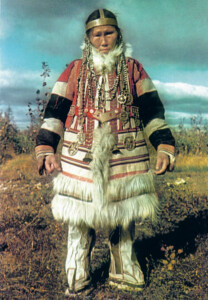
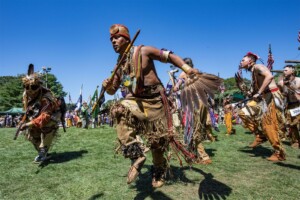 But what was strongly on my mind upon transition to waking consciousness this morning was village life and the importance of this in rooted shamanic practice. It's probably the single thing I've most longed for and has been the most elusive. And this is where the intersection of the shamanic impulse and the archaic impulse meet.
 ny shamanic individual who attempts to create such a dynamic, regardless of how indigenous or legitimate they are as shamans, what results can quickly start to take on the characteristics of a cult, wholly unnatural if not tended genuinely from a village-making mind and heart. Likewise, without some semblance of a properly held relationship between shamanic elder and student, or students if in a cohort, the very roots of the shamanic practice are at best shallow, or on rocky terrain. To get to the depths of legitimate and safe shamanic practice one must have had elders, real living elders whom they’ve been tended by properly, who are ensuring the emotional, spiritual, mental, and physical well-being of the initiate is solid. This goes well beyond merely teaching shamanic concepts or skills. It entails closely held relationship.
 mundane into sacred. Many indigenous people the world over readily recognize that we here in the West have forgotten how to tend the soul, have forgotten how to make humans. And so within us exists this deep archaic impulse- an ache for what we have lost. This impulse not only compels us towards a community belonging, a village way of living, a deeper connection with nature and our immediate surroundings, and perhaps even an
 item is taken out or added. But we don’t look at chicken noodle soup, take out the chicken (the shaman), and then still define it as that. There are certain ingredients that define the soup and also distinguish it from other types of soup. And so it is with shamanism. We must come to a collective definition of what shamanism is, contrasted with what it is not- because carrots are not soup, and peas are not soup. They may be contained in the thing we’re calling chicken noodle soup (which ought to properly have at least chicken and noodles), but we can take peas and carrots out and standing alone they’re not shamans. Just as those we call a ‘medium’ is not a shaman. And yet shamans must have mediumship abilities. While some might argue that we don’t have a recipe so we can make anything we want, if we’re trying to retrieve fragmented aspects of real shamanic lineage and look to current animistic cultures that have stronger support for the shamanic role we have to take careful steps to follow some kind of recipe that is universal enough to be understood by all, yet also mindful of the local ingredients available to us.


 and is by far the most liberal in its definition of shamanism. One significant advantage of this eagle-eyed view of shamanism is that it has no concern for specific cultural influences and expressions of shamanism and thus becomes timeless. The archetypal view seeks to understand shamanism as a global human experience that has existed for millennia, and the shamanic role as something that has ebbed and flowed throughout history and across regions based on many external factors, many of which have intentionally suppressed the shamanic impulse (religious missionaries framing archaic practices as savagery, for example, and shamans as witchdoctors, sorcerers, and evil). But even within the community that is exploring and holding an archetypal concept of shamanism there is some variety. Some see shamanism as a practice that is
 solely in terms of initiation and the process of shamanizing (for example, from a framework of The Hero’s Journey, as popularized by


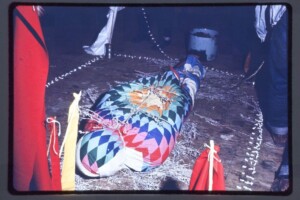
 look like earth-based spirituality, like animism, like indigenous ways of being. This in itself isn’t shamanism, but it’s a burden that seems necessary for shamanic people in Western cultures- perhaps part of the collective karma of colonialism. It really requires Western shamans to be cultural visionaries in addition to shamans so that they can effectively carve out the space that acknowledges the relevance of the Spirits in our lives. But the mixing of the two can appear to some to be an


 such a claim when some expressions of archaic shamanism are strongly tied to deep lineages of ritualized initiation processes. But to make this point clearer, consider that peoples living in tribal cultures often live communally, are subsisting or are living very minimally, live in relative harmony with and are intimate with the ecosystem, and have routinized and simplistic lives. The shared resources and responsibilities potentially lend to far fewer individual stressors. In contemporary, technology-driven, post-industrial cultures people are living isolated and extremely complex lives, where they are continually bombarded by external stimuli and are completely disconnected from their local natural resources. And so for people in remote, tribal cultures the initiatory process can tend to be more contrived, more externally ritualized, based on long-standing tradition, whereas in modern cultures it tends to happen through just living in the complex society. For example, the urban shaman may experience the death initiation through a literal experience of surviving a catastrophic car accident, whereas

 grouping of shamanic ‘gifts.’ But most of these gifts aren’t freely given- they have to be earned. And so a shamanic initiation can look like a literal brush with death, like enduring severe trauma, like having a major accident or suffering a serious illness or disease. It can look like a psychotic break. This is primarily because the role of the shaman is to serve the community as a spiritual mediator between the Spirit world and the material world. This requires the shaman to have one foot in the Spirit realm, and one foot in the material, and the highly tuned skill-set required to be in that role requires a rigorous initiation. In fact, each facet of the shamanic archetype the shaman expresses will have likely resulted from it’s own initiatory process. For example, I identify most with the Wounded Healer and the Initiated Into Darkness facets of the archetype. These each had overlapping but separate initiation processes, and the initiations for those facets involved severe early-childhood traumas. That caused an immediate death- a death of my innocence, death of my unencumbered sense of myself. It catapulted me into the Spirit realm, and in order to survive in the physical I had to develop finely honed skills. It took me decades to do the work of transmuting that into an act of service- of coming into service as a shamanic practitioner.

 Campbell, following the footsteps of Jung, and like many who have, was a